
Beyond Alarms: Securing Healthcare in 2026 with Unified Strategies
.webp)
Healthcare facilities are meant for healing, yet 2026 finds them under unprecedented threat. Hospital staff face rising violence from agitated patients and visitors, while digital attacks on networked medical systems can literally put lives at risk. The challenge is twofold: protect people and data without transforming hospitals into fortresses.
A growing consensus points to a new approach – one that unifies physical and cyber defenses to address the biggest threats, from workplace violence to cyber-physical vulnerabilities.
The Escalating Threat of Violence in Healthcare
Violence has become alarmingly routine in healthcare settings. Nurses, physicians, and support staff are roughly five times more likely to experience workplace violence than workers in any other industry. In fact, healthcare now accounts for 73% of all nonfatal workplace injuries from violence – a sobering statistic that underscores how unsafe many hospitals have become for their own employees. Emergency departments, behavioral health units, and even maternity wards have all seen incidents ranging from verbal abuse and threats to assaults and active shooters.
In one study, over half of U.S. nurses reported abuse or assault in the last two years – and more than a quarter said they were considering leaving their job as a direct result. The financial toll is staggering as well: U.S. hospitals spent an estimated $18.27 billion in 2023 on costs related to violence against employees (security measures, medical care, lost labor, etc.).
Key contributors to healthcare violence – high stress environments, emotionally charged visitors, patients in crisis, and open public access – won’t disappear overnight. But forward-thinking hospitals are adopting new tools to mitigate the danger. For example, many are rolling out wearable panic/duress buttons for nurses and doctors, enabling them to summon help to their exact location at the press of a button.
There’s also a greater push to keep weapons out of hospitals. Historically, fewer than one-third of healthcare facilities used metal detectors at their entrances, due to cost and the desire to maintain a welcoming atmosphere. In 2026, some hospitals are replacing old metal detectors with AI-powered screening systems that can discreetly detect guns or knives without bottlenecking entry. These newer systems allow for “free-flow” visitor screening – they can flag a concealed weapon on a person walking in, while avoiding the privacy intrusion and delays of manual scans.
Perhaps most importantly, a cultural change is underway. Hospitals are training security and clinical staff in de-escalation and trauma-informed care techniques to diffuse violent encounters empathetically. The goal is a safer hospital that still feels like a place of healing – not a high-security prison.
Cyber-Physical Convergence: When Digital Threats Hit Home
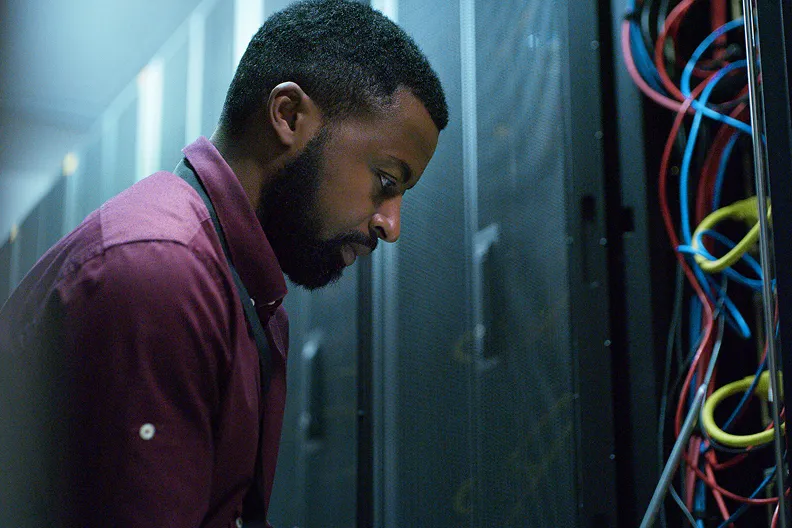
Physical violence isn’t the only menace keeping healthcare executives up at night. Cyber threats that spill over into patient care. Modern hospitals are hyper-connected – from electronic health record systems and networked medical devices to “smart” HVAC and security cameras – which means a hacker’s keyboard can have physical, life-or-death consequences.
The risks are no longer theoretical. In 2025, a major ransomware attack on London hospitals provided a chilling wake-up call when a patient died after critical IT systems for blood work were knocked offline. The incident halted thousands of appointments and led to at least 170 cases of compromised care or harm.
Such cyber-physical incidents blur the line between a data breach and a direct threat to life. They’re also becoming more frequent. In surveys, 80% of healthcare organizations report being targeted by cyberattacks in the past year, and over half of healthcare executives believe a fatal cyberattack on a U.S. hospital is inevitable within the next five years.
It’s not hard to see why they’re concerned. Ransomware groups and nation-state actors have elevated healthcare to a prime target, knowing that hospitals are often willing to pay ransom rather than endanger patients. These attacks don’t just expose data – they can freeze access to medical records, disable vital equipment, and force emergency rooms to divert ambulances.
Crucially, the convergence of physical and digital security gaps is now front and center. Breaches often begin with a physical security lapse. An intruder slips through an unattended door; a stolen employee badge grants access to a server room; an unauthorized USB stick infects a workstation. Conversely, a cyber incident can manifest as physical chaos – from alarm systems malfunctioning to HVAC controls being hijacked. Healthcare organizations are realizing that these overlapping risks must be managed as one unified resilience challenge, rather than in silos.
This is leading to concrete changes. Many hospitals are auditing and upgrading their healthcare access control systems, recognizing that outdated RFID badge cards can be easily cloned using devices bought online. In response, hospitals are migrating to more secure credentials – like mobile smartphone-based badges or biometrics – often protected by two-factor authentication for especially sensitive areas like pharmacies or data centers. This shift reflects a broader move toward identity‑centric security across the sector.
Likewise, IT and security teams are working hand-in-hand to secure devices that bridge the cyber and physical realms. Every network-connected camera, badge reader, or medical device is also a computer vulnerable to hacking. ‘Shadow AI’ devices – for instance, a staffer plugging an unsanctioned smart gadget into the hospital network – now pose a real threat to data security and patient safety. To counter this, hospitals are instituting stricter policies on physical device access, port controls (to prevent unknown USB devices), and continuous monitoring of connected equipment for anomalies.
Even the critical infrastructure that keeps hospitals running is under scrutiny. Administrators talk about securing “life support” systems – not just the machines that ventilate patients, but the electrical and mechanical systems that power the facility. An attack that cuts off oxygen supply or disables backup generators could be catastrophic. Ensuring the resilience and monitoring of these systems has become a growing priority for 2026. Hospitals are beginning to treat these systems with the same seriousness as clinical equipment.
Ultimately, the message is clear: cybersecurity and physical security can no longer be separate conversations in healthcare. A door left propped open can lead to a data breach, and an email phishing scam can endanger patient lives. The new imperative is a blended defense.
What Integrated Security Actually Looks Like in Practice
Confronted with threats on all sides, hospitals are rethinking their security from the ground up. The consensus emerging among experts is that piecemeal measures aren’t enough – what’s needed is an integrated, intelligent approach that breaks down the traditional silos between physical security, cybersecurity, and operational teams.In practical terms, an integrated security platform means unifying things like access control, video surveillance, alarm systems, communication tools, and cyber monitoring into one cohesive ecosystem. This creates a single operational picture instead of fragmented, reactive responses.
What does this look like on the ground? It starts at the entry points: modern access control systems can automatically screen visitors and contractors against watchlists and ensure they only go where they’re permitted. If an individual is flagged (say, an ex-employee with a violent history), security is instantly notified, and entry can be denied or restricted.
Crucially, this is done in a way that maintains a welcoming atmosphere. For instance, integrated systems can quietly check IDs and scan for prohibited persons in the background, avoiding bottlenecks that slow care. The aim is invisible guardrails that enhance security without erecting walls between healthcare providers and those they serve. This balance of strong security without visible friction is becoming a defining feature of modern healthcare protection.
Inside the hospital, advanced AI-powered cameras monitor every corridor and doorway for signs of trouble. Unlike passive CCTV that only records, these intelligent cameras can interpret activity – spotting, for example, if someone is loitering in a restricted area or if a visitor suddenly brandishes a firearm.
If a threat is recognized, the system can trigger automated actions within seconds, sending an alert to on-duty guards’ radios or phones, locking certain doors, calling up live video feeds at the security command center, and even initiating an automated announcement or text alert to staff in the vicinity.
One hospital that adopted such an AI visual monitoring platform saw dramatic results – security could intervene faster to calm agitated visitors or assist distressed patients before situations escalated. These proactive interventions not only prevent harm but also reassure staff that threats will be spotted and stopped early, reinforcing morale and trust in the safety system.
Modern security tech can be deployed in privacy-sensitive ways that comply with HIPAA regulations. For instance, AI video analytics can be configured not to use facial recognition or store any personally identifiable images. Algorithms can monitor for danger while blurring out patients in beds or avoiding cameras in exam rooms.
Some hospitals even digitally mask certain camera views (like a nurse station board with patient names) so that security feeds don’t expose private health information. Data from access logs or incident reports is protected with the same care as medical records.
By baking in strict privacy controls and usage policies (who can access feeds, how long footage is kept, etc), hospitals can ensure that ramping up security doesn’t mean eroding patient trust. The goal is smart surveillance — watching for threats, not watching people.By layering smart technology, human training, and compassionate policies, hospitals can address today’s threats without succumbing to a climate of fear or a heavy-handed atmosphere.
Take, for example, the issue of workplace violence. Rather than simply posting more guards with guns (which can alarm patients), an integrated strategy might involve a combination of early detection AI, so security is alerted to aggression and can respond with de-escalation; environmental design tweaks, like better lighting and direct lines of sight, to reduce hiding places; and staffing protocols that ensure no one is left alone in a high-risk situation.
What visitors experience is a calm, well-organized facility – not a security gauntlet – yet behind the scenes, the protection is vastly improved.
This is the essence of modern healthcare security - strong, subtle, and centred on care.
The benefits go beyond safety. A unified security strategy can drive efficiency and coordination. Automated processes – like granting or revoking staff access privileges through integration with HR systems – reduce administrative burden and errors. When a clinician leaves the organization, a single update can simultaneously disable their login, door badge, and email access, closing potential security gaps.
During emergencies, integrated mass notification tools can instantly communicate lockdown instructions or evacuation orders to everyone on site (via text, pager, overhead announcements) without delay. This level of orchestration simply isn’t possible when security systems operate in isolation.
Finally, integrating security lets hospitals gather data-driven insights to continually improve. Trends in access attempts, incident locations, or response times can be analyzed to inform policy and facility changes. If one entrance sees frequent unauthorized access attempts, it can be hardened or staffed differently. If certain shifts or units see more aggression, targeted training can be provided.
Hospitals are no longer just securing buildings. They’re securing behaviours, patterns, and vulnerabilities.
A New Era of Resilience and Trust
For healthcare executives and security leaders, the mandate is clear: the status quo won’t hold in the face of escalating workplace violence and cyber-physical threats. Across the industry, we are seeing a mindset shift from reactive fear to proactive resilience. Hospitals are proving that you can bolster safety without turning your facility into a bunker or compromising compassionate care. The keys are integration, innovation, and a people-first philosophy.
A human touch remains essential. Technology can augment the vigilance of staff but not replace the empathy and judgment needed in a care setting. The ultimate vision for healthcare security is one where everyone – from the ER nurse to the CIO – shares a collective sense of responsibility and empowerment to maintain a safe environment.
As we move further into 2026, healthcare security is poised to become smarter, more unified, and more adaptive. The hospitals that succeed will likely be those that can tell a positive story: that they confronted the dual crises of violence and cyber threats head-on, and emerged with solutions that make their facilities both secure and healing.
In an era of constant challenges, resilience itself becomes a competitive advantage.
.jpg)
.webp)
.webp)