
Best Centralized Security Insights Tools: Top 11 in 2026
.webp)
Security teams are generating more data than they can meaningfully act on. Cloud infrastructure alerts, network traffic logs, access events, endpoint telemetry, compliance reports — the volume is relentless. The problem most organizations face isn't a lack of security monitoring. Their monitoring is fragmented, making it nearly impossible to connect the dots before damage is done.
The best centralized security insights tools solve this by bringing everything into a single, coherent view — combining continuous security monitoring, threat detection, and incident response in one place. This guide covers 11 of the strongest platforms available in 2026, including a close look at the one that gets physical and digital security working together.
Note: If your visitor logs live in a separate system, and your physical and digital security still don't talk to each other — then there's a better way to protect your people, premises, and data. Book a free Acre Security demo and see the difference firsthand. 👉 Click here.
The 11 Best Centralized Security Insights Tools
Centralized security monitoring is the practice of aggregating security data from across an organization's environment — cloud infrastructure, on-premises systems, endpoints, physical access points, and network devices — into a unified management platform. Rather than monitoring each system in isolation, security teams get a consolidated picture of risk in real time.
Continuous security monitoring (CSM) tools enable earlier detection, faster response, and better alignment across security, operations, and development teams. They collect data from network traffic, system event logs, and user activity, then apply analysis and automation to surface what matters most. The goal is clarity, not just coverage.
Here are our top 11 tools. We’ll start with the one we know best–our own.
1. Acre Security

Best for: Unified physical and digital security monitoring across multi-site estates
Most security monitoring tools focus on the digital estate. Acre Security covers both — bringing access control, visitor management, intrusion detection, and secure networking infrastructure under one coherent management layer. For organizations where physical access is as consequential as a firewall rule, that distinction matters.
One Platform, Complete Visibility
Acre's cloud-native access control platform delivers real-time alerts, analytics dashboards, and multi-site administration from a single interface. Whether you're overseeing three buildings or three hundred, the security monitoring experience remains consistent. Security teams can track access events, flag anomalies, and review audit trails without switching between disconnected systems.
The portfolio spans Acre Access Control (enterprise cloud platform), ACT365 (cloud AC with open API), ACTpro (on-premises controller-based system for sovereign or air-gapped sites), and the Smart Controller — a cost-optimized hardware unit designed to bring enterprise-grade cloud AC within reach of smaller deployments.
Continuous Security Monitoring Across the Physical Estate
Acre's approach to continuous security monitoring extends well beyond traditional digital tools. The platform monitors door access events, visitor flows, and intrusion alerts in real time — giving security operations teams the visibility they need to detect threats before they escalate.
The intrusion stack (Acre Intrusion, formerly SPC) includes professional-grade panels paired with advanced wireless detectors, event verification workflows, and the SPC Connect cloud portal for remote fleet management. Security teams can monitor, configure, and update panels across sites without dispatching engineers — a meaningful reduction in operational overhead.
Razberi Monitor, part of the Comnet networking portfolio, extends health and performance monitoring to the edge: cameras, controllers, switches, and server appliances. Continuous monitoring of netcwork infrastructure means security gaps are identified and resolved proactively rather than reactively.
Real-Time Threat Detection and Incident Response
Acre integrates threat detection directly into physical access workflows. Anomalous access events — out-of-hours entry, repeated failed credentials, or access to restricted areas — trigger real-time alerts. Combined with VMS and PSIM integrations, security analysts can verify events, coordinate responses, and document outcomes within a single workflow.
For organizations managing high-risk sites, Acre supports automated incident response patterns including system-wide lockdowns, zone-based alerts, and emergency mustering via ACT365 and compatible turnstile hardware. The platform's open API architecture means it can feed event data into broader security operations tooling where needed.
Enterprise Visitor Management With Built-In Compliance Tracking
Visitor data is security data. Acre's Enterprise Visitor Management (EVM) platform captures pre-registration details, check-in flows, badge issuance, and departure records — creating an auditable log of everyone who enters a facility. Compliance tracking is built in, with configurable data retention policies, GDPR-aligned controls, and exportable reports for regulatory or internal audit purposes.
EVM integrates with Outlook, Microsoft Teams, Google Workspace, and 125+ workplace tools, making it practical to adopt without disrupting existing workflows. Kiosk and tablet check-in flows, host notifications, and QR-activated access badges reduce friction at the front desk while maintaining a reliable security record. Read more about why Acre is ranked among the best visitor maangement tools.
Built for Hybrid Environments
Not every site can run entirely in the cloud. Regulated environments, heritage buildings, and government estates often require on-premises access control with strict data sovereignty. Acre's hybrid architecture — on-prem AC controllers paired with cloud visitor management and monitoring — gives security leaders the control they need without sacrificing the operational benefits of cloud services.
Acre's ACTpro platform supports air-gapped deployments, while ACT365 and Acre Access Control handle cloud-native requirements. The two can coexist across the same portfolio — a practical hybrid architecture for organizations managing mixed estates.
Common Objections, Direct Answers
"We're not ready to move everything to the cloud." You don't have to. Acre's hybrid model is designed for organizations navigating that transition from on-prem to cloud. Start with cloud visitor management and monitoring, keep access control on-prem where required, and expand at a pace that suits your risk profile and regulatory obligations.
"We already have a SIEM — why add a physical security platform?" Because your SIEM cannot see your doors. Combining digital threat intelligence with physical access monitoring creates a more complete picture of your organization's security posture. Acre fills the gap that purely cyber-focused security tools leave open.
Key Features
- Cloud-native and on-premises access control (Acre Access Control, ACT365, ACTpro, Smart Controller)
- Enterprise Visitor Management with compliance tracking, GDPR-aligned retention, and 125+ integrations
- Professional intrusion detection with cloud portal (SPC Connect) and remote fleet management
- Real-time threat detection, automated incident response, and VMS/PSIM integration
- Secure network infrastructure monitoring via Razberi Monitor (Comnet by Acre)
- Hybrid deployment: air-gapped on-prem AC + cloud visitor and monitoring layers
- 250+ technology partner integrations across identity, video, workplace, and networking
2. Splunk Enterprise Security
Best for: Large-scale log management and enterprise SIEMe
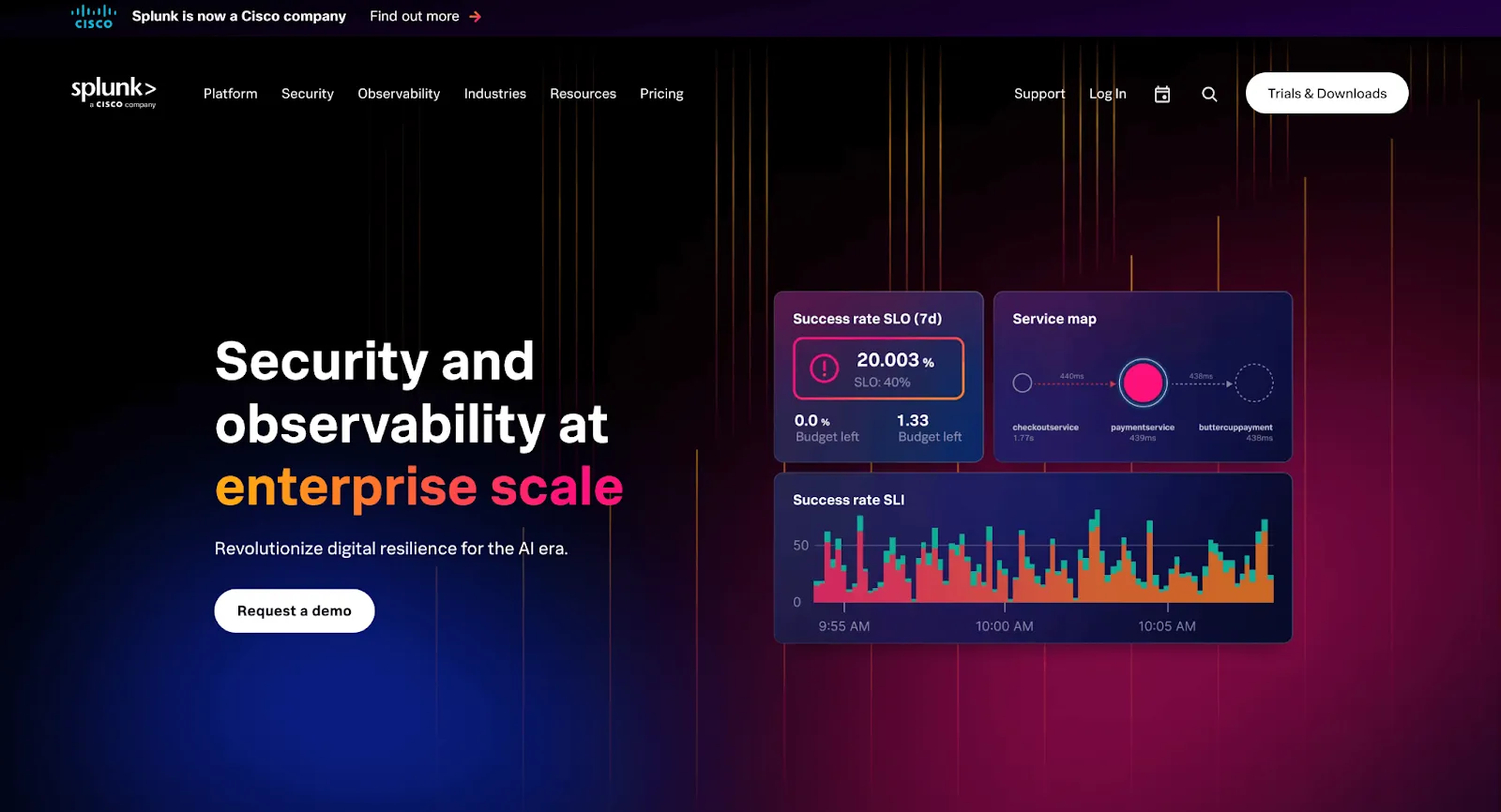
Splunk Enterprise Security is one of the most widely deployed network security monitoring tools in enterprise environments. Its strength lies in data ingestion at scale — it can ingest, index, and search across massive volumes of security events from virtually any source. Machine learning-driven risk-based alerting and user behavior analytics help reduce false positives, keeping security teams focused on genuine threats. Splunk supports both cloud and on-premises deployments, making it a viable option for organizations with hybrid infrastructure.
Key Features:
- Log management and security event correlation at enterprise scale
- Machine learning-driven risk-based alerting to reduce false positives
- User behavior analytics and customizable dashboards
- Hybrid cloud and on-premises deployment
3. Microsoft Sentinel
Best for: Microsoft-centric environments and cloud-native SIEM
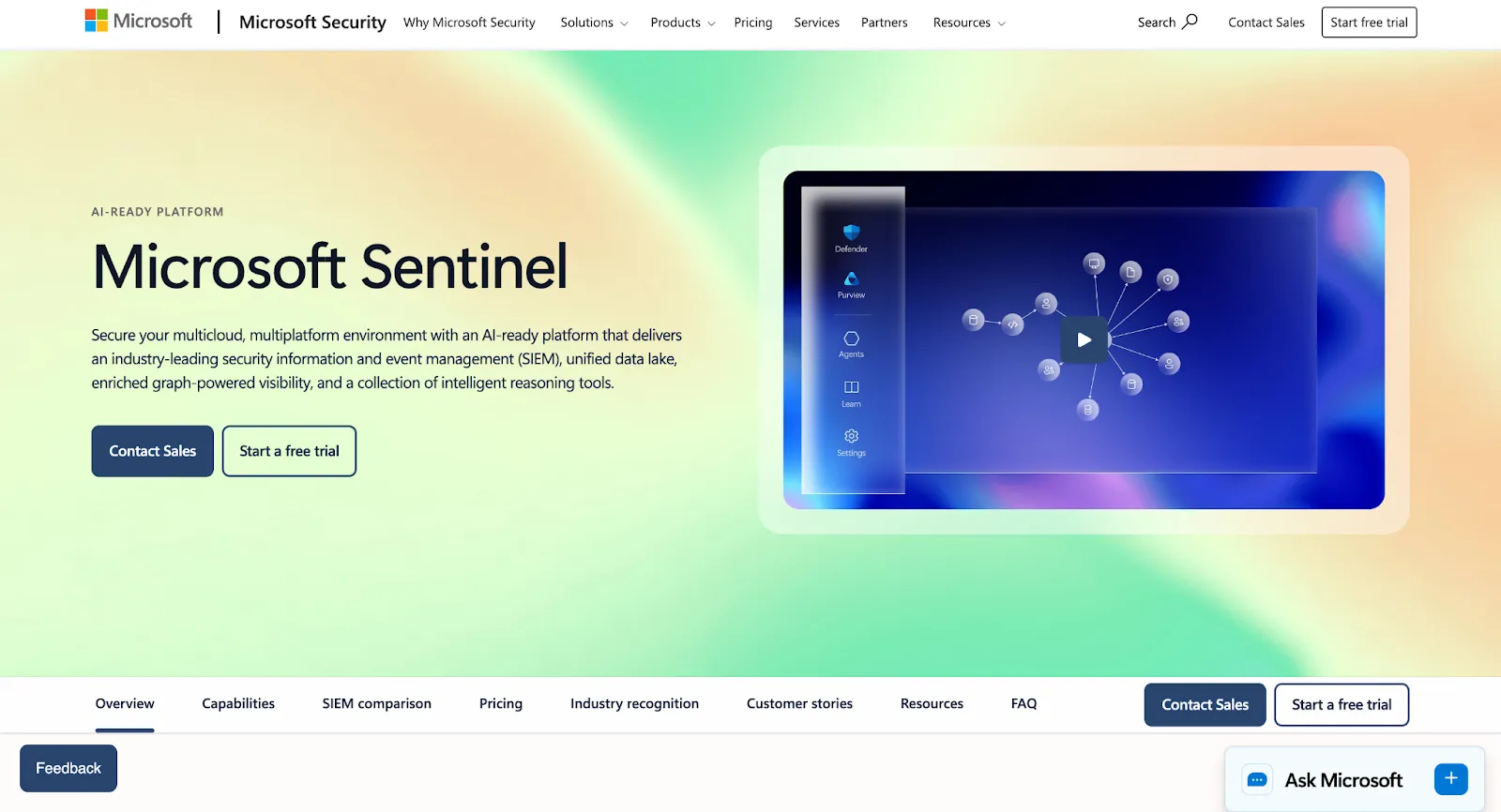
Microsoft Sentinel is a cloud-native SIEM and SOAR platform built on Azure, with no infrastructure management required. Its native integration with Microsoft 365, Azure Active Directory, and Defender products gives it a significant advantage in Microsoft-heavy environments. Automated threat intelligence, AI-driven threat detection, and built-in incident response capabilities make it a strong choice for organizations already invested in the Microsoft ecosystem. Sentinel is exclusively cloud-native, so it requires no server maintenance — a genuine operational advantage at scale.
Key Features:
- Cloud-native SIEM with no infrastructure overhead
- AI-driven threat detection and automated incident response
- Deep Microsoft 365 and Azure ecosystem integration
- Compliance management and threat intelligence integration
4. IBM Security QRadar
Best for: Compliance-heavy industries requiring advanced threat correlation
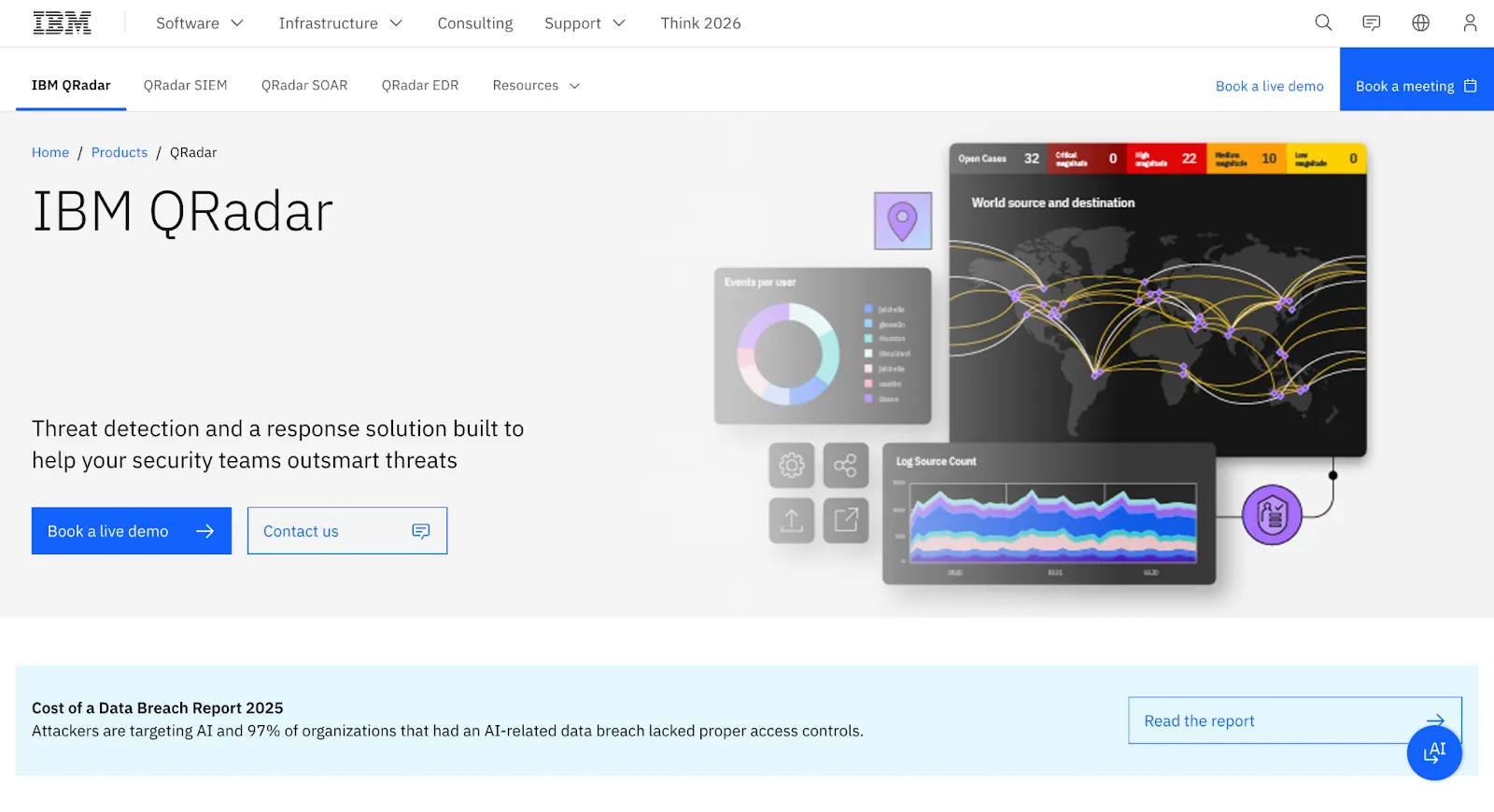
IBM QRadar is known for its advanced threat detection engine and robust compliance automation. AI-driven magnitude scoring prioritizes alerts based on relevance and severity, helping security analysts cut through noise and focus on security events that actually require action. It performs well in industries with strict regulatory compliance requirements, such as financial services and healthcare, where audit trails and compliance reporting are as important as threat response.
Key Features:
- Advanced threat detection and correlation with AI-driven prioritization
- Robust compliance automation and management
- Network security monitoring and log management
5. Exabeam
Best for: User and entity behavior analytics (UEBA)
Exabeam specializes in detecting insider threats and subtle lateral movement through machine learning-driven behavioral analytics. Where rule-based security monitoring tools produce high volumes of false positives, Exabeam's UEBA approach focuses on deviations from established baselines — identifying anomalous behaviour even when individual events appear benign in isolation. It's a natural complement to traditional SIEM platforms.
Key Features:
- User behavior analytics and insider threat detection
- Machine learning-driven anomaly detection to reduce false positives
- Automated incident response capabilities
6. CrowdStrike Falcon
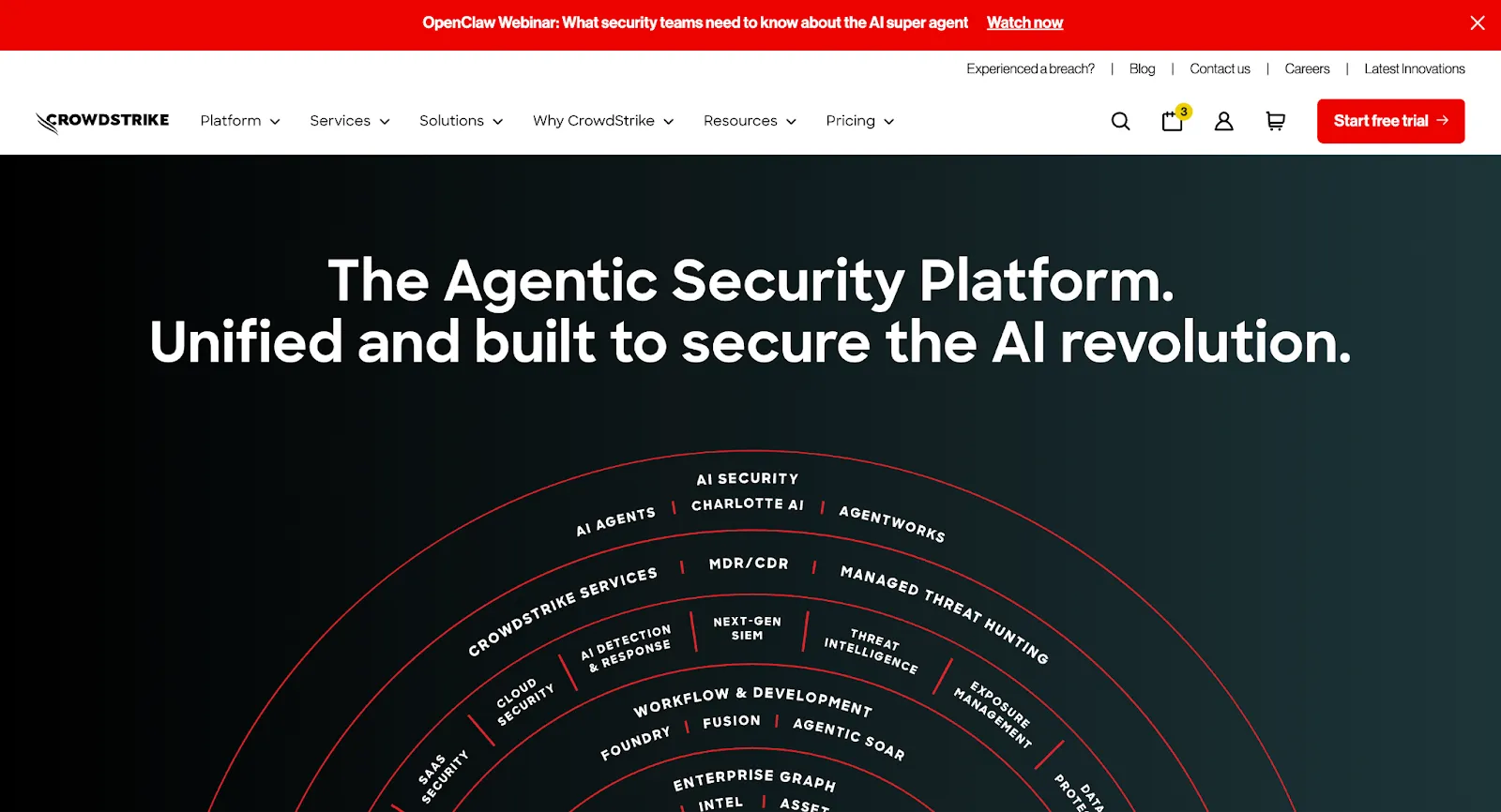
Best for: AI-driven endpoint protection and XDR
CrowdStrike Falcon is one of the leading platforms for AI-driven threat detection at the endpoint, with a rapidly growing XDR footprint that extends coverage to cloud workloads and network security. Falcon processes more than one trillion daily events through its cloud-scale AI engine, Threat Graph, enabling proactive threat hunting and predictive attack analysis. Its intuitive interface and strong automated incident response capabilities make it well-regarded among security operations teams.
Key Features:
- AI-driven threat detection across endpoints and cloud workloads
- Proactive threat hunting via Threat Graph engine
- Real-time threat detection and automated incident response
7. SentinelOne Singularity
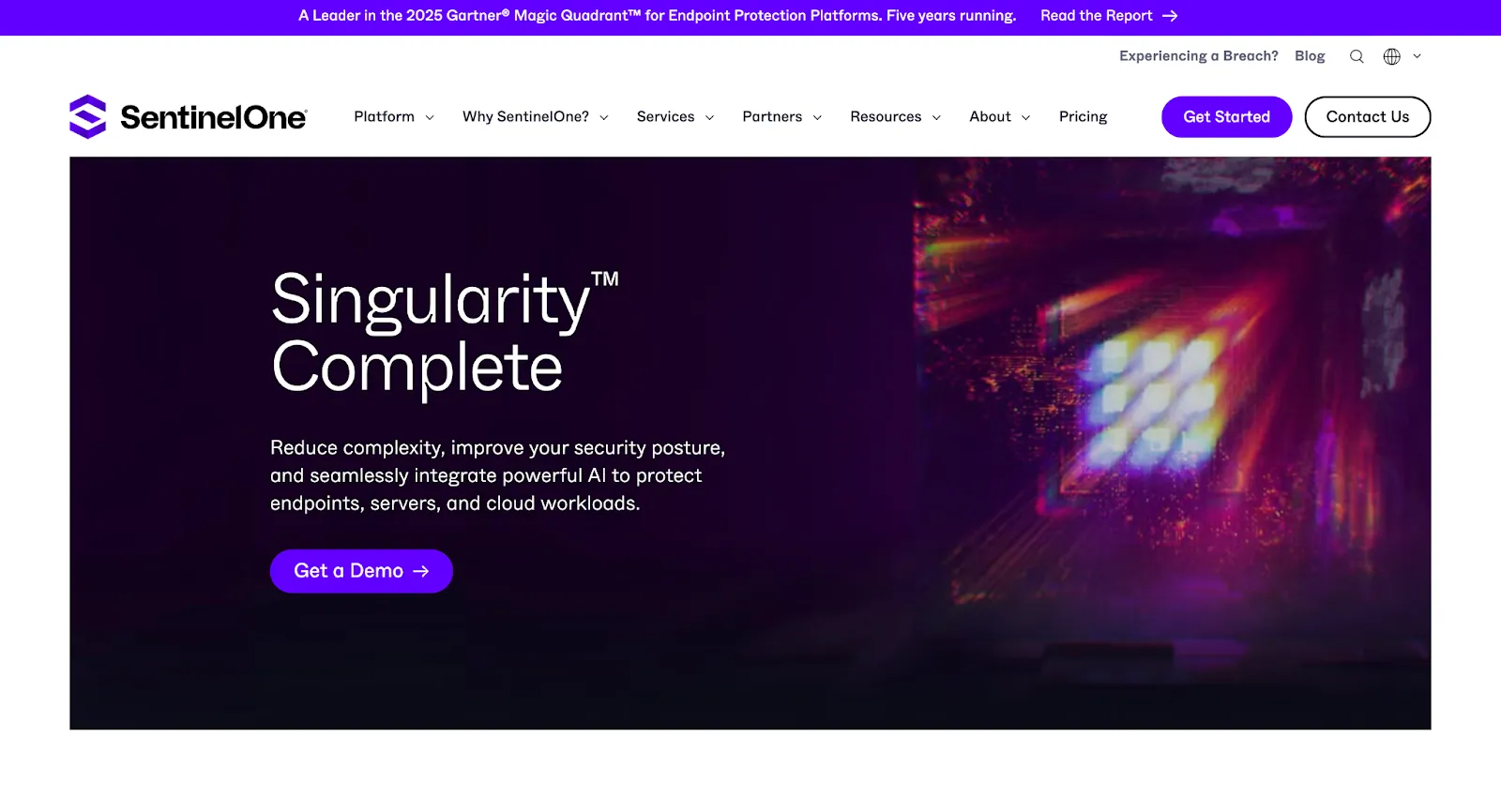
Best for: Autonomous AI-driven threat response
SentinelOne Singularity uses autonomous AI to detect and respond to threats across endpoints, cloud workloads, and identity environments. Its Purple AI assistant supports in-depth investigation workflows and contextual alert summaries, reducing the time security analysts spend on manual triage. Singularity's CNAPP capabilities extend cloud security monitoring to container registries, Kubernetes clusters, and infrastructure-as-code templates.
Key Features:
- Autonomous AI threat detection and response
- CNAPP with cloud security monitoring and vulnerability management
- Purple AI for accelerated investigation and incident response
8. Palo Alto Networks Cortex XDR
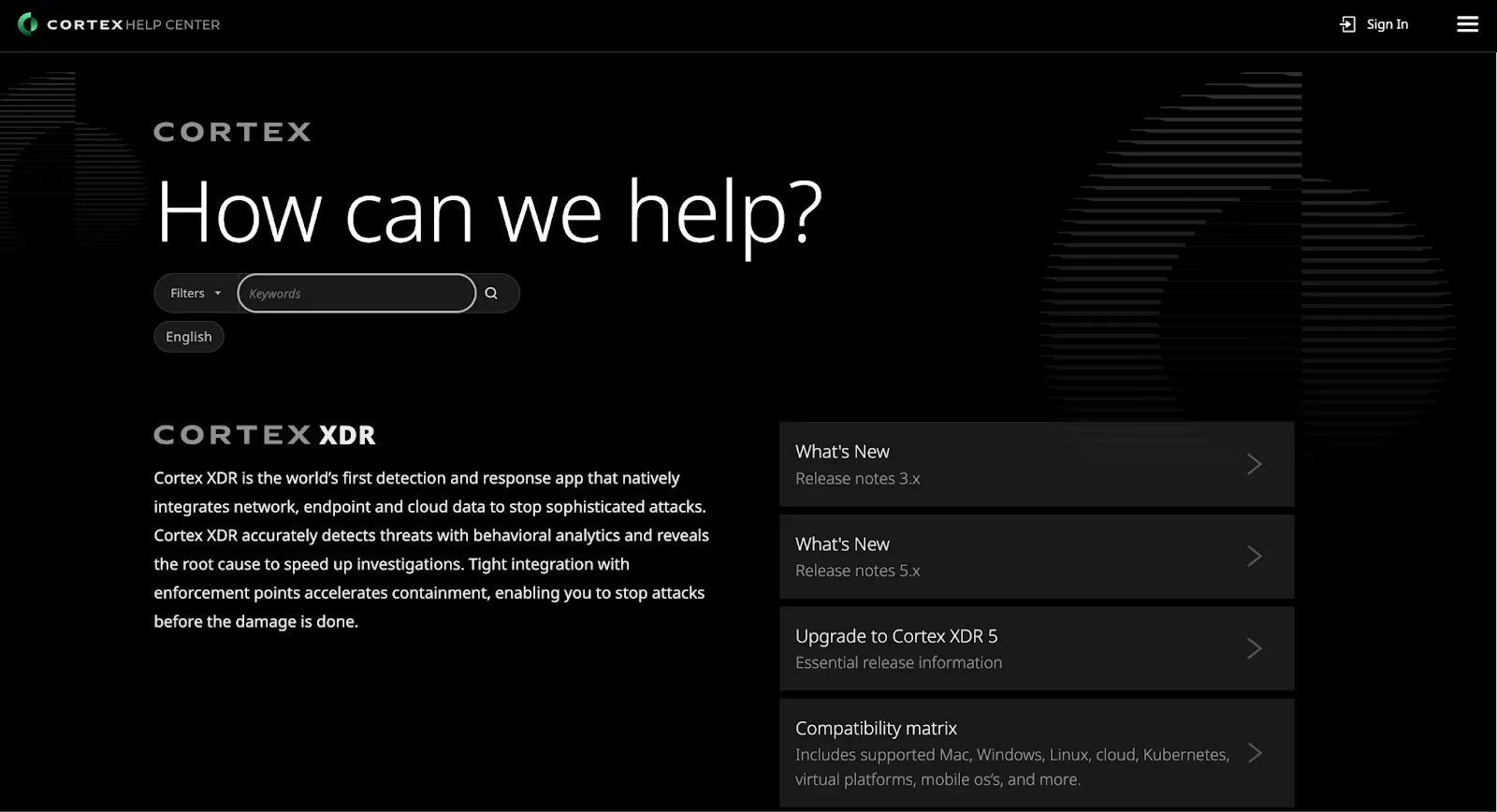
Best for: Unified detection across endpoints, networks, and cloud
Cortex XDR provides AI-based detection across endpoints, networks, and cloud workloads, achieving a 100% detection rate in recent MITRE ATT&CK evaluations. Its behavioral analytics engine helps identify advanced threats that signature-based tools would miss. For security teams already running Prisma Cloud or other Palo Alto products, Cortex XDR integrates cleanly into an existing unified management platform.
Key Features:
- Multi-domain XDR with AI behavioral analytics
- Advanced threat detection across endpoints, network, and cloud environments
- Incident response capabilities and proactive defence
9. Wiz
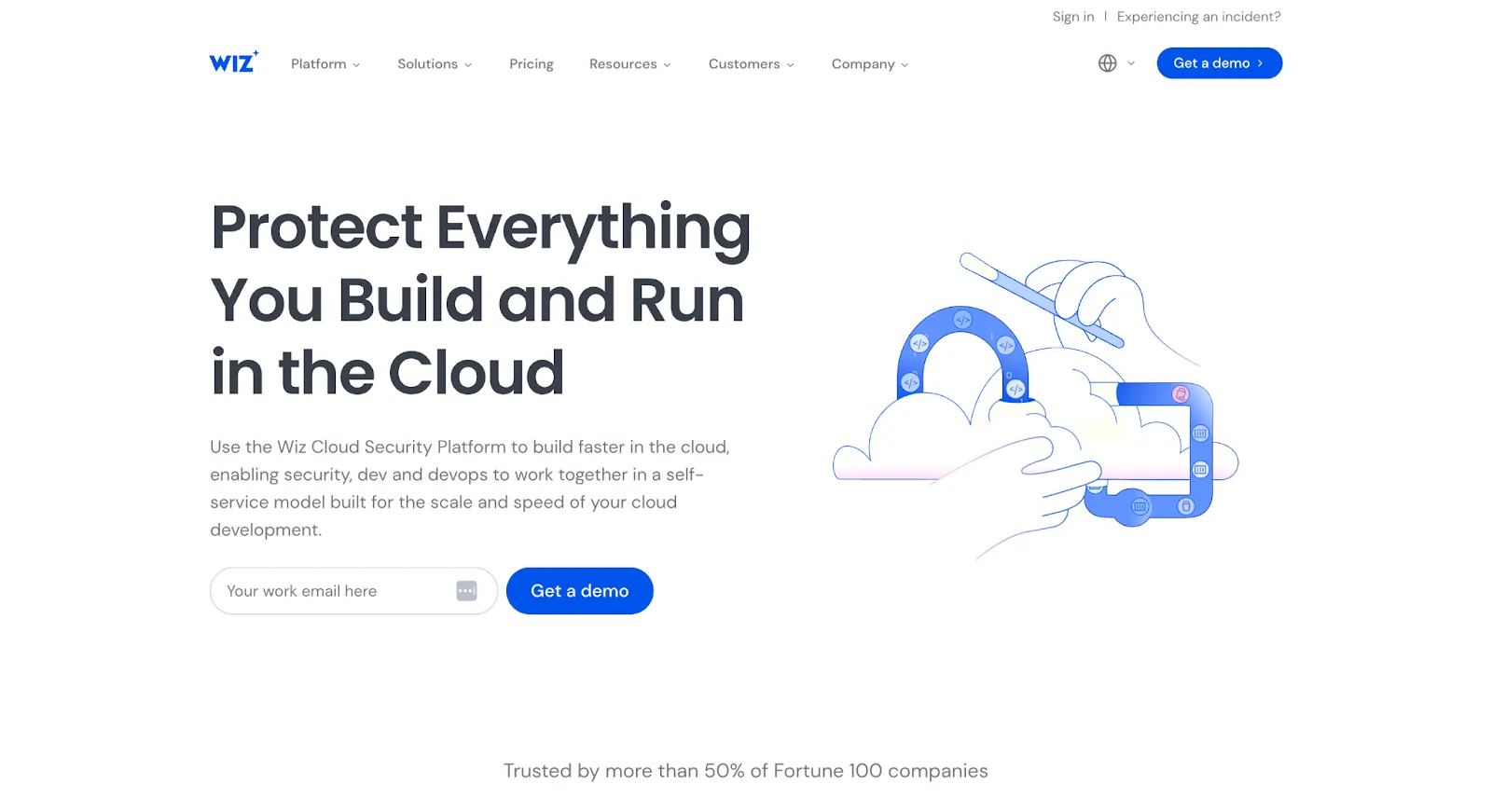
Best for: Agentless cloud security posture management (CSPM)
Wiz has established itself as one of the leading cloud security monitoring tools for multi-cloud environments. Its agentless scanning approach means rapid deployment with minimal operational overhead. Wiz maps cloud misconfigurations, identifies risky access paths, and surfaces vulnerability management findings across AWS, Azure, and GCP — giving security teams comprehensive visibility without requiring agent installation on individual workloads.
Key Features:
- Agentless CSPM and cloud security posture management
- Vulnerability management across multi-cloud environments
- Compliance tracking and real-time monitoring of cloud resources
10. Elastic Security
Best for: Open-source flexibility and high-volume search
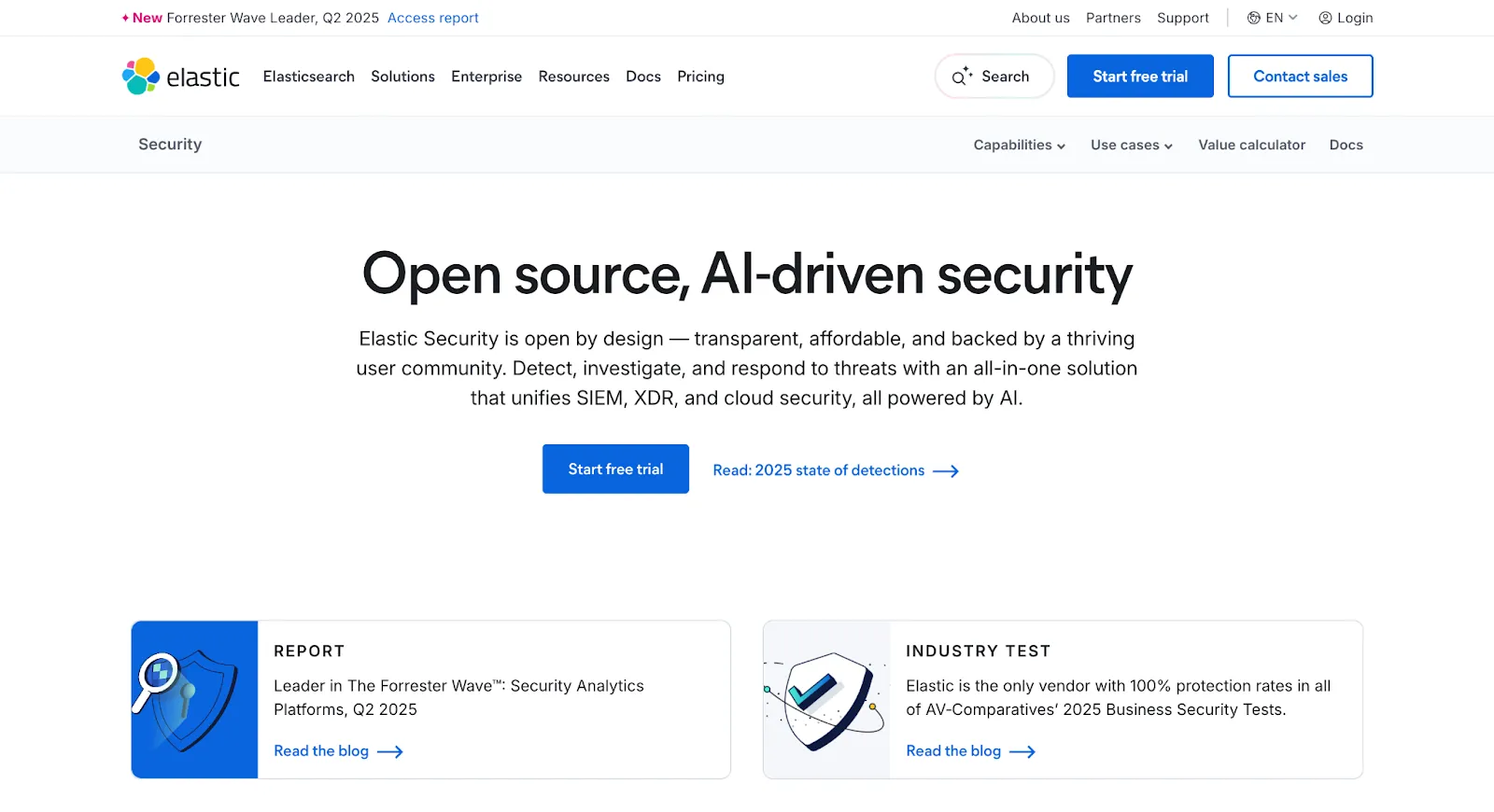
Elastic Security builds on the Elasticsearch foundation to deliver a flexible, open-source security monitoring tool capable of handling high-speed search and analysis across large datasets. Its open architecture makes it particularly appealing to technical teams who want to customize detection logic, integrate proprietary data sources, or avoid vendor lock-in. Elastic supports both cloud and on-premises deployments and is a capable network security monitoring tool for organizations with the team to configure it effectively.
Key Features:
- Open-source SIEM with high-volume log management
- Flexible data sources and customizable detection rules
- Cloud-native and on-premises deployment options
11. Vanta
Best for: Automated compliance tracking and security certification
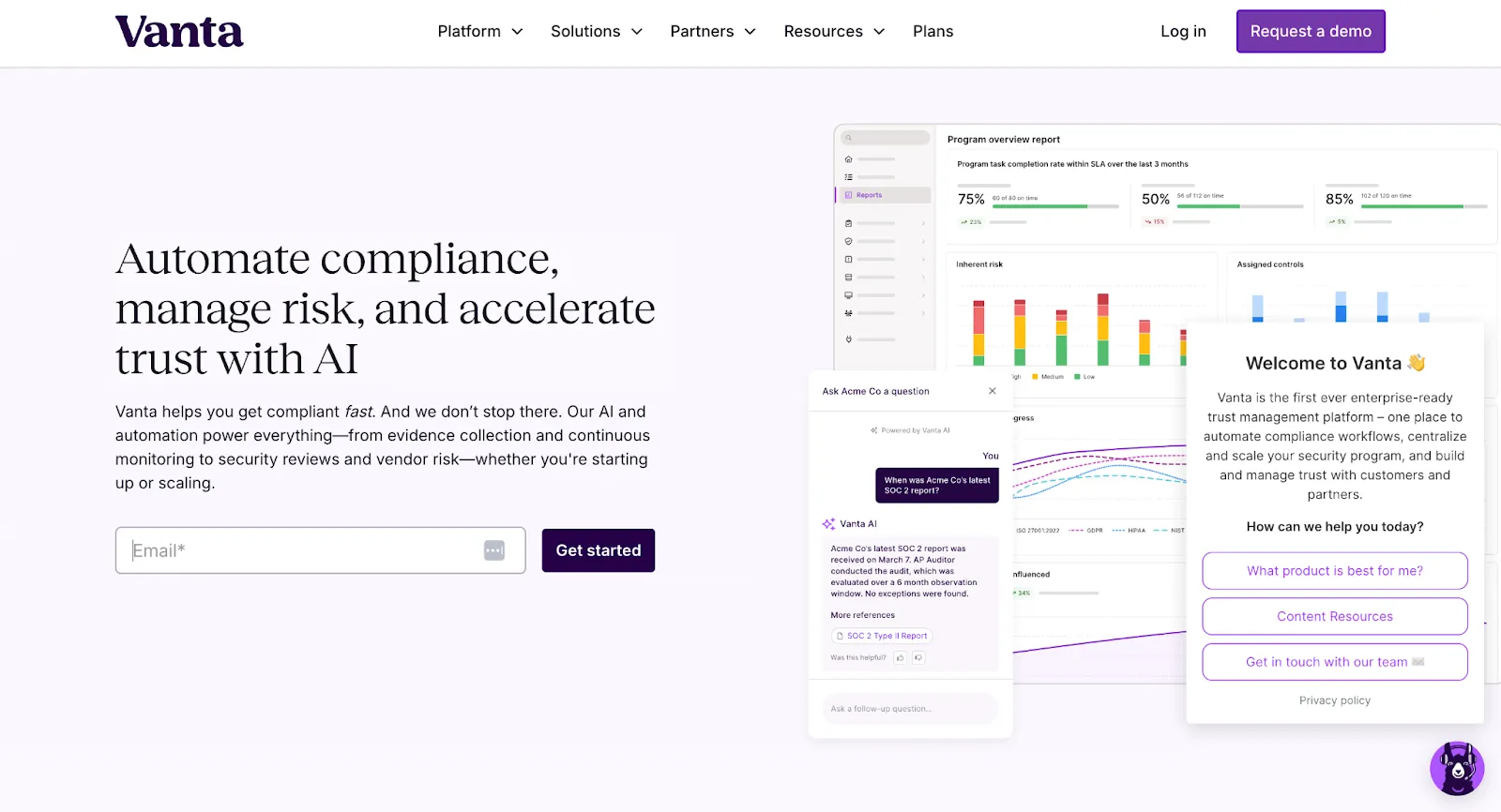
Vanta automates compliance tracking and evidence collection across frameworks including SOC 2, ISO 27001, HIPAA, and GDPR. It continuously monitors cloud infrastructure and connected systems for security risks, mapping findings directly to compliance requirements. For organizations managing security certifications alongside a broader security monitoring programme, Vanta reduces the manual effort involved in audit preparation and ongoing compliance reporting. Find out more here.
Key Features:
- Automated compliance tracking across SOC 2, ISO 27001, HIPAA, and GDPR
- Continuous security monitoring of cloud infrastructure and services
- Compliance reporting and proactive defence against regulatory risk
How to Choose the Right Centralized Security Monitoring Tool
Choosing the right continuous security monitoring tool depends on the nature of your environment, your team's capacity, and where your most significant risks sit. Here are the factors that matter most.
Identify Your Primary Risk Domain
Different tools are built for different threat surfaces. SIEMs focus on log analysis and security events. CNAPPs and CSPM tools address cloud infrastructure risk. EDR and XDR platforms prioritize endpoint and network security monitoring. Physical security platforms like Acre cover access control, visitor management, and intrusion. Most organizations need coverage across more than one domain — which is why integration capabilities matter as much as individual features.
Consider Your Deployment Model
Cloud-native tools generally deploy faster and require less infrastructure management. On-premises and hybrid tools give you greater control over data sovereignty — critical in regulated industries. Some organizations need both: a cloud security monitoring tool for digital workloads and an on-premises or hybrid solution for physical access and sensitive data environments. Acre's hybrid architecture is specifically designed to support this balance.
Evaluate Integration Depth
A security monitoring tool that can't communicate with the rest of your stack creates more complexity, not less. Prioritize platforms with open APIs, native connectors to your identity provider, and documented integrations for the systems you already run. Continuous security monitoring tools must be constantly updated with the latest security intelligence and able to integrate with other security tools, such as intrusion detection systems and firewalls.
Align With Your Compliance and Regulatory Requirements
Continuous security monitoring tools help organizations maintain regulatory compliance with frameworks like GDPR, HIPAA, and SOC 2 by automating evidence collection and ensuring security posture is always aligned with current standards. Identify which frameworks apply before selecting a platform, and confirm the tool's compliance tracking capabilities cover your specific requirements.
Factor In Total Cost of Ownership
The value of protection against future risks and compliance penalties can outweigh the initial price tag of continuous security monitoring tools. That said, organizations should evaluate the total cost of ownership, including implementation, training, and ongoing management. Some platforms are powerful but assume a capable technical team. Others are designed for operational simplicity and rapid deployment — an important consideration for lean security teams.
Frequently Asked Questions
Which CSPM tool is the best?
Wiz and Prisma Cloud are consistently cited as leading cloud security monitoring solutions for CSPM, providing strong visibility into cloud misconfigurations and compliance gaps across multi-cloud environments. Microsoft Defender for Cloud is a strong choice for Azure-centric or hybrid environments. The best option depends on your cloud infrastructure mix and whether you need standalone CSPM or a broader CNAPP with additional security monitoring capabilities.
Which SIEM tool is most widely used?
Splunk Enterprise Security is one of the most widely deployed network security monitoring tools in enterprise environments, recognized for its data ingestion capabilities, powerful search, and extensive ecosystem. Microsoft Sentinel is the dominant cloud-native SIEM, particularly in Microsoft-centric organizations. IBM QRadar remains widely used in compliance-heavy industries where advanced threat correlation and audit automation are priorities.
What is one of the most effective security tools?
Continuous security monitoring tools are broadly considered among the most effective investments an organization can make. The best cloud security monitoring tools combine signals with runtime context, ownership data, and business-critical insight, enabling security teams to act faster and with greater confidence. For organizations with physical sites, a unified platform like Acre — covering access control, intrusion, and visitor management alongside digital monitoring — delivers value that purely cyber-focused tools cannot replicate.
Can you make $500,000 a year in cyber security?
At senior levels — CISO, VP of Security, or specialized architect roles at large enterprises or financial institutions — compensation packages exceeding $500,000 are achievable in markets like the United States, particularly when equity and bonuses are included. The skills gap in security and IT affects approximately 43% of organizations, which continues to drive compensation upward for experienced professionals. Continuous security monitoring expertise, cloud security architecture, and incident response leadership are among the most in-demand specializations.
Final Thoughts
The best centralized security insights tools share a common purpose: reducing the time risks go unnoticed and giving security teams the context they need to act decisively. Whether you're evaluating a cloud security monitoring tool for a distributed digital estate, a SIEM for your security operations centre, or a platform that covers physical access and intrusion alongside cyber, the right choice starts with understanding your environment.
Acre Security stands apart for organizations that can't afford to treat physical and digital security as separate problems. A door is a security perimeter. A visitor log is an audit trail. An access event is as meaningful as a network packet — when you have the tools to see it.
Investing in continuous security is not just about reacting to past incidents. It's about building the visibility and resilience to stay ahead of what's coming. The organizations that get this right don't just monitor their environments — they understand.
.jpg)
.webp)
.webp)