
Verkada vs Acre Security: Complete Security Platform Comparison
.webp)
Verkada and Acre Security are leading examples of the new generation of cloud-managed physical security platforms. Both offer unified solutions for video surveillance, access control, and more, making them frequent contenders for organizations modernizing their security infrastructure. This guide provides an unbiased, in-depth comparison of Verkada vs Acre, evaluating their features, pricing, deployment models, and best-fit scenarios to help security leaders make informed decisions.
Note: If you're evaluating Verkada and want to understand where a cloud-native enterprise platform fits better, the gap between streamlined simplicity and long-term scalability matters more than most buyers anticipate. Acre is built for organizations that need flexible, enterprise-grade access control without being locked into a closed hardware ecosystem. Talk to the Acre team to see how Acre performs against your specific requirements.
Quick Verdict
Verkada and Acre Security take fundamentally different approaches to physical security:
- Verkada delivers a tightly integrated, closed cloud-only experience with unified hardware and streamlined management.
- Acre Security offers an open, flexible platform that supports cloud, hybrid, and on-premise deployments, making it ideal for organizations with complex or evolving needs.
Summary Recommendations:
- Best overall: Acre Security for large, complex, or multi-site enterprises needing flexibility and integration.
- Best for native video surveillance: Verkada, with its onboard camera analytics, built-in storage, and unified footage management.
- Best for hybrid flexibility: Acre Security, supporting both cloud and on-premise deployments.
- Best for enterprise scale: Acre Security, with robust multi-site and integration capabilities.
Verkada vs Acre comparison at a glance
Run the numbers here.
What is Verkada?
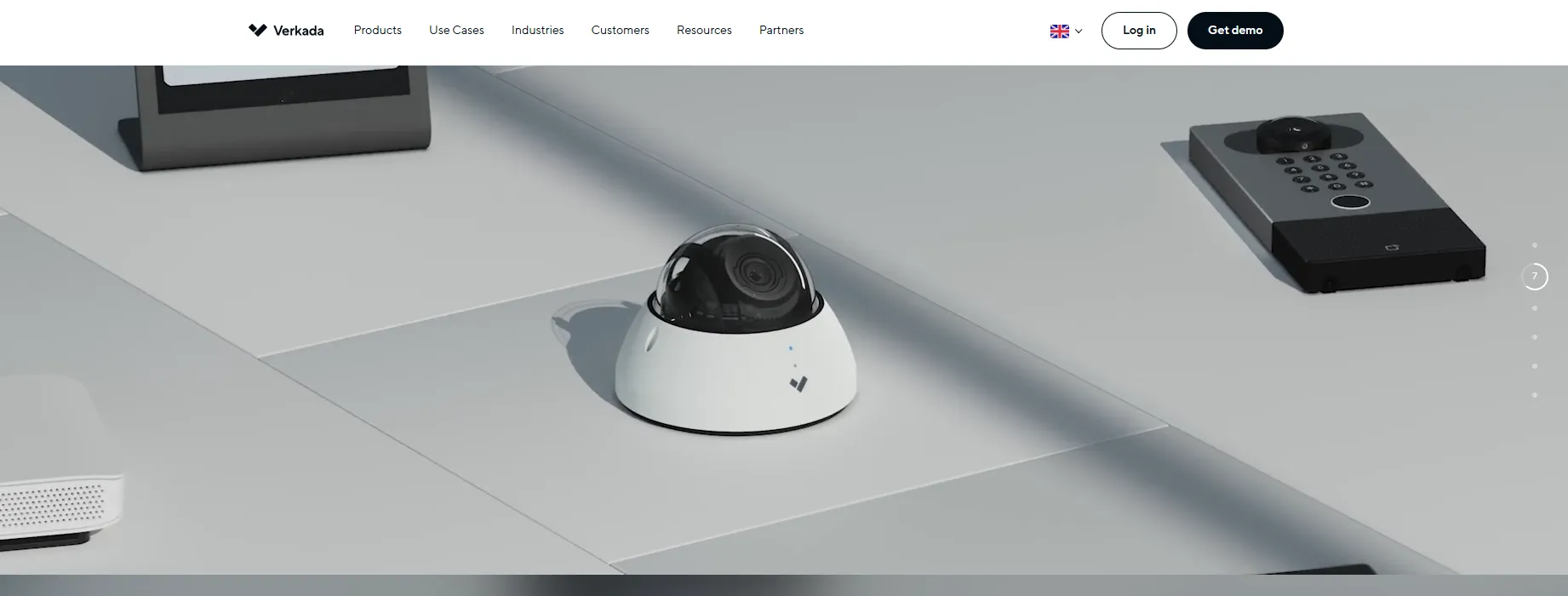
Verkada is a cloud-managed physical security provider that combines hardware, software, and centralized management into a single, unified platform. Rather than stitching together separate vendors for cameras, access control, alarms, and sensors, Verkada delivers these systems as an integrated ecosystem that is configured and monitored through one web-based console called Command.
Its product portfolio includes cloud-connected video cameras with onboard storage and analytics, door access control, environmental sensors, intrusion alarms, and intercoms. Devices are designed for plug-and-play installation and automatically connect to the cloud for remote visibility, updates, and management. This architecture reduces the need for on-premise servers, complex networking, or multiple management tools.
For security and IT teams, the practical benefit is operational simplicity. Administrators can manage users, sites, alerts, and investigations from one interface, deploy systems quickly across distributed locations, and scale without significant infrastructure overhead. Built-in analytics, centralized logs, and mobile access also help teams respond faster to incidents and maintain consistent policies across facilities.
Verkada is typically a strong fit for organizations that prioritize fast deployment, ease of use, and standardized hardware, especially small to mid-sized businesses or multi-site operations that want a streamlined, cloud-first approach with minimal IT maintenance. If you're evaluating Verkada alongside other enterprise platforms, our Genetec, Acre, and Verkada comparison breaks down how each solution performs across key buying criteria.
What is Acre Security?
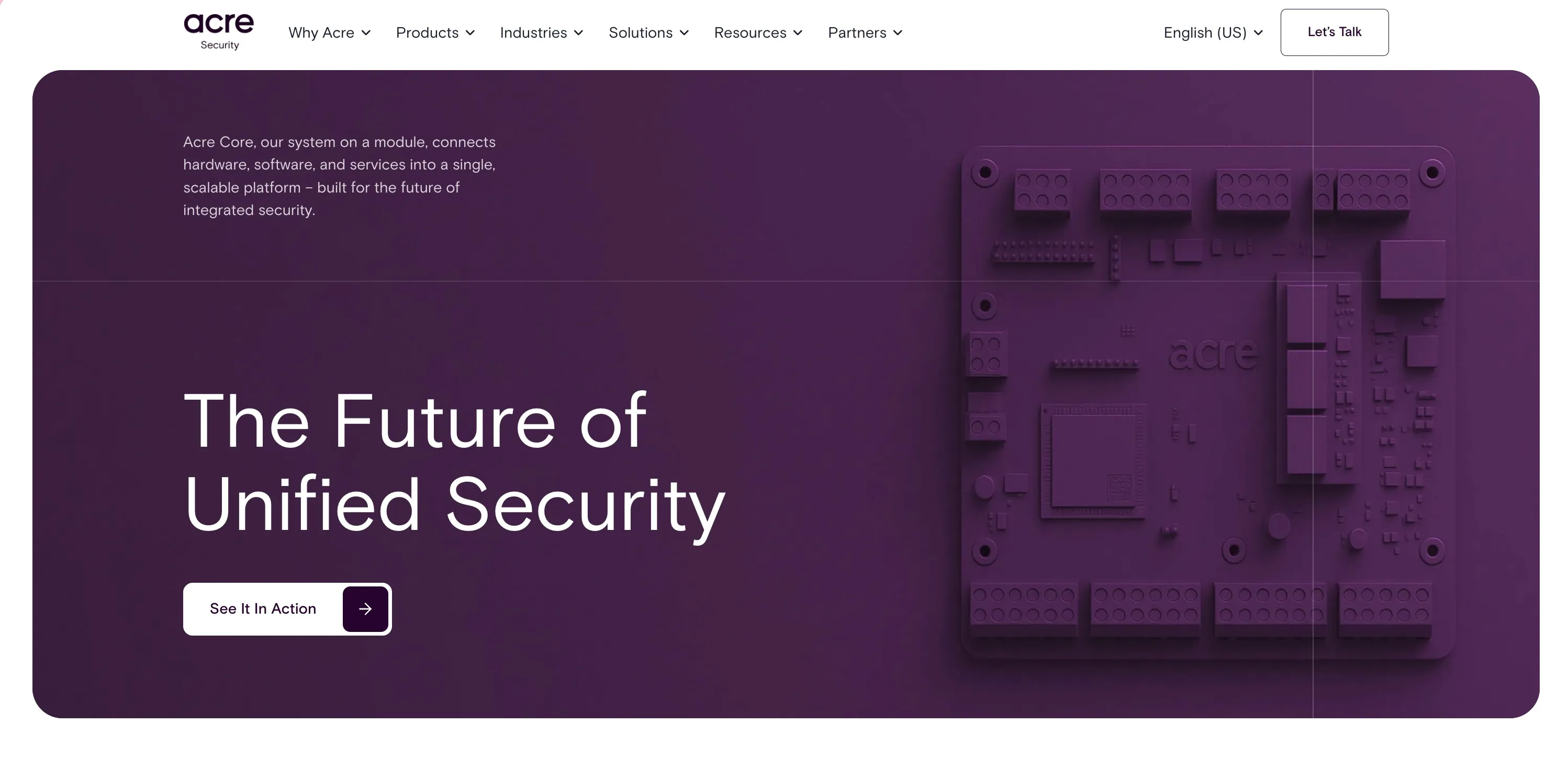
Acre Security is a unified physical security platform built for organizations that need flexibility, scalability, and architectural control. It brings together access control, intrusion detection, visitor management, and identity services into one system that can be deployed in the cloud, on-premise, or in hybrid environments.
Unlike closed, single-vendor ecosystems, Acre is designed with an open and modular architecture. Teams can integrate third-party hardware, connect with existing enterprise systems, and modernize incrementally without replacing their entire infrastructure. This approach helps protect prior investments while allowing security operations to scale over time.
For IT and security leaders, the practical advantage is choice and adaptability. Acre supports centralized management across multiple sites, customizable workflows, and deployments that align with compliance, data residency, or network requirements. This makes it especially well suited for large, distributed, or regulated organizations that need more control than a cloud-only model can provide.
In short, Acre fits enterprises that value integration, deployment flexibility, and long-term scalability over a one-size-fits-all solution.
Core Feature Comparison
Choosing between Verkada and Acre Security comes down to how each platform delivers the day-to-day security capabilities your team relies on. Both address the same core domains, video, access, intrusion, visitors, deployment, and integrations, but they differ in how tightly those capabilities are packaged and how much control administrators retain.
Video Surveillance
Verkada: Cameras include onboard storage and native analytics, with footage, alerts, and investigations handled in one consistent interface. The experience is standardized across all devices.
Acre Security: Supports a broader range of camera technologies and deployment styles, enabling teams to tailor surveillance setups and reuse existing hardware where needed. Acre has also announced plans to build a native video management system directly into the Acre Access Control app — complementing its existing enterprise-level integrations like Milestone and giving organizations a more unified experience without sacrificing flexibility.
Access Control
Verkada: Provides a unified system where doors, credentials, and events are managed together with minimal configuration. Workflows are designed to be simple and consistent across locations.
Acre Security: Offers more configurable access policies and hardware options, giving teams greater control over permissions, schedules, and site-specific requirements.
Intrusion and Environmental Monitoring
Verkada: Native sensors and alarms are monitored alongside video and access activity, creating a single, consolidated view of incidents.
Acre Security: Intrusion capabilities can be layered into broader security strategies and adapted to different facility needs.
Visitor Management
Verkada: Integrated visitor features such as digital sign-in, badge printing, and centralized logs are managed from the same dashboard as other security tools.
Acre Security: Visitor and identity workflows can be aligned with existing access processes and organizational policies for more customized handling.
Deployment Flexibility
Verkada: Cloud-managed architecture with devices connecting directly to the vendor’s platform, minimizing on-site infrastructure and simplifying rollout.
Acre Security: Supports cloud, hybrid, or fully on-premise deployments, allowing organizations to choose where systems run and where data resides.
Integrations and Ecosystem
Verkada: Operates primarily within its own ecosystem with a focused set of integrations designed for simplicity and consistency.
Acre Security: Provides broad third-party hardware compatibility, open APIs, and a larger partner network to support deeper integrations with enterprise systems. Each system (access, intrusion, and visitor) is modular and can be purchased as standalone systems or integrated with one another to operate as one unified ecosystem.
Administration and Usability
Verkada: Streamlined interface with minimal training required, making it easier for lean teams to manage multiple sites quickly.
Acre Security: More advanced controls and configuration options suited to teams that need granular oversight and customization.
In Practice
Verkada prioritizes simplicity, speed, and standardization across the entire platform. Acre prioritizes flexibility, interoperability, and architectural control. The right choice depends on whether your team values out-of-the-box ease or the ability to tailor every layer of the system.
Pricing Comparison
Exact pricing for both platforms depends on deployment size, hardware selection, and feature requirements. Buyers should evaluate total cost of ownership, including hardware, software, subscriptions, maintenance, and any migration or integration work, to ensure alignment with long-term operational needs.
Pros and Cons
Here’s a practical view of the strengths and trade-offs of Verkada and Acre Security based on day-to-day operations and long-term ownership.
Verkada Pros
- Simple, unified cloud management across all devices
- Fast deployment with minimal on-site infrastructure
- Consistent interface and workflows across cameras, doors, and sensors
- Lower IT overhead for small or distributed teams
- Strong remote access and mobile administration capabilities
Verkada Cons
- Proprietary hardware limits vendor choice and creates lock-in and high upfront costs
- Less flexibility for highly customized or legacy environments
- Cloud-only architecture may not fit strict compliance or data policies
- Costs scale directly with device count and subscriptions
Discover more Verkada alternatives here.
Acre pros
- Flexible deployment options to match IT and compliance requirements
- Broad hardware compatibility protects existing investments and lowers upfront costs
- Strong fit for large, multi-site, or complex enterprise environments
- Greater control over configuration, policies, and workflows
- Easier to integrate into existing security stacks and processes
Acre cons
- No native video management system - yet (announced plans for one in 2026)
- More planning and configuration required during setup
- Experience can vary depending on selected hardware and partners
- May require dedicated security or IT expertise to manage effectively
- Pricing and scoping are often customized, making budgeting less straightforward
Best Fit by Use Case
Decision Framework: How to Choose
Choosing between Verkada and Acre Security is less about features and more about how each platform fits your environment, resources, and long-term plans.
Consider your environment
Organizations with standardized locations and limited internal IT support often benefit from systems that are easy to deploy and manage. Environments with diverse site types, legacy infrastructure, or varying security requirements typically need more adaptability.
Consider control and compliance
If your organization has requirements around data control, infrastructure ownership, or regulatory compliance, deployment flexibility becomes a key factor in the decision.
Consider your team
The right platform should match your operational capacity. Smaller teams tend to value simplicity and low maintenance, while larger or more technical teams often benefit from greater configurability and control.
Think long term
Security platforms are long-term investments. Consider how the system will scale, integrate with other tools, and evolve as business and compliance needs change. Choosing a platform that aligns with your future state can reduce costly transitions later.
Selecting the right platform means balancing ease of use today with the flexibility you may need tomorrow.
Why Choose Acre Security
Acre Security is purpose-built for organizations that need flexibility, control, and long-term scalability from their physical security platform. Rather than locking you into a single deployment model or proprietary hardware stack, Acre gives you the freedom to design a solution around your environment, whether cloud, hybrid, or on-premise.
Its open architecture, broad hardware compatibility, and strong integration capabilities make it easier to unify access control, intrusion, visitor, and identity workflows across multiple sites while protecting existing investments. As your business grows or requirements change, Acre adapts with you, so you can expand, modernize, or integrate without starting over.
For enterprises with complex operations, compliance obligations, or multi-site footprints, Acre delivers the control and configurability needed to build a security strategy that lasts.
Ready to see how Acre can fit your environment? Connect with the Acre team to design a solution tailored to your organization.
Final Verdict
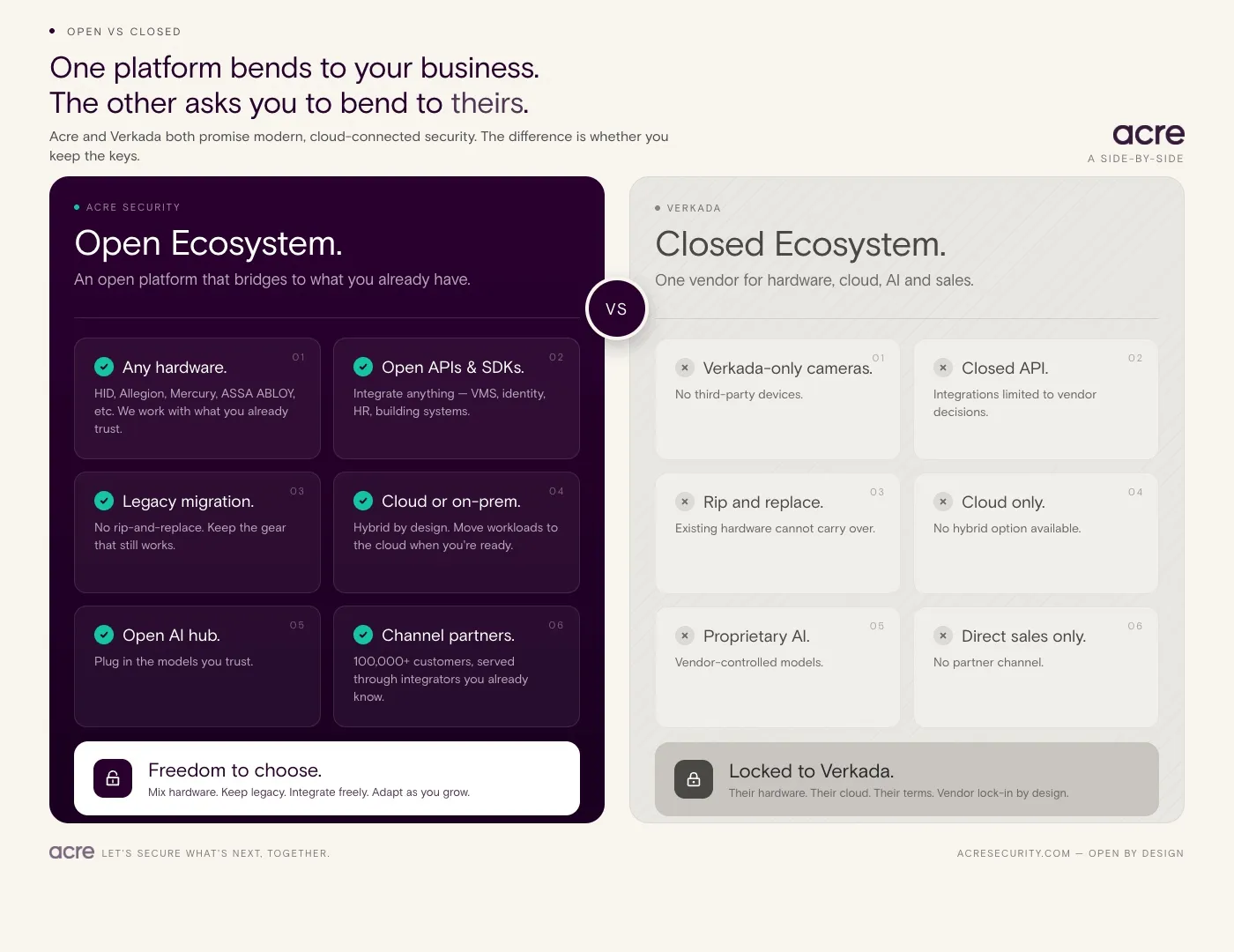
Both Verkada and Acre Security represent the modern shift toward unified, software-driven physical security. The right choice is not about which platform has more features, but which model better aligns with how your organization operates today and how it plans to grow.
Verkada focuses on simplicity and fast, standardized deployment, which can work well for smaller teams or environments that value quick rollout and minimal management. Acre takes a more flexible approach, giving enterprises greater control over architecture, hardware, and integrations so security can scale and adapt over time.
For organizations with multiple sites, existing systems, or evolving compliance requirements, flexibility and long-term ownership often matter more than convenience alone. In those cases, Acre Security provides a foundation that can grow with your business rather than constrain it.
As you evaluate your options, consider not just immediate needs but where your security program will be three to five years from now. Choosing a platform that supports that future can reduce complexity, protect investments, and deliver lasting value.
FAQs
What types of organizations typically choose Acre Security?
Acre is commonly selected by mid-size to large organizations with multiple locations, mixed infrastructure, or specialized requirements. It is especially well suited for teams that need to tailor security workflows to different sites rather than standardize everything on one hardware stack.
When does Verkada make the most sense?
Verkada often fits smaller or highly standardized environments where speed, simplicity, and minimal maintenance are the top priorities. Teams that want a plug-and-play system with fewer configuration decisions may prefer this approach.
Can Acre support gradual upgrades instead of full system replacement?
Yes. Acre’s modular design allows organizations to modernize in phases, adding or replacing components over time. This can help reduce disruption and protect existing investments.
How much internal IT support is typically needed for each platform?
Cloud-managed systems generally require less day-to-day IT involvement, while more configurable platforms may benefit from dedicated security or IT administrators. The right choice depends on how hands-on your team wants to be.
Which platform is better for organizations with existing security investments?
A platform that supports broader hardware and system compatibility is typically easier to align with current infrastructure. This approach can help avoid unnecessary rip-and-replace projects and lower migration costs.
How important is long-term flexibility when choosing a security platform?
Very important. Physical security systems are long-term investments, often lasting years. Choosing a platform that can scale, integrate, and adapt to new requirements can reduce future costs and operational friction.
Can these platforms integrate with broader business systems like identity or facilities tools?
Yes. Most modern platforms offer ways to connect with other business systems. Organizations that rely heavily on cross-system workflows may want to prioritize solutions with stronger extensibility and customization options.
How should we evaluate total cost of ownership?
Look beyond upfront hardware. Include licensing, support, maintenance, upgrades, integrations, and future expansion. The lowest initial price does not always result in the lowest long-term cost.
%20(794%20x%20528%20px)%20(4).png)