
Visitor Management System for Schools: The Ultimate Guide
.webp)
Your front desk isn't a security checkpoint. For most schools, it's a sign-in sheet, a clipboard, and a receptionist trying to manage morning drop-off while simultaneously answering the phone. Every parent, contractor, volunteer, and courier who walks through the door gets a cursory wave at best. That's not school visitor management. That's organized hope.
The gap between what schools need and what paper-based visitor processes actually deliver is where incidents happen. Staff can't screen visitors against national sex offender registries in real time. They can't instantly notify a host that their scheduled contact has arrived. They can't produce an accurate, timestamped visitor log for compliance audits without digging through folders. And in an emergency, they can't tell first responders exactly who is on campus.
A properly deployed visitor management system for schools solves all of this, and it does it without turning your lobby into a checkpoint that makes families feel unwelcome. This article covers what separates effective school visitor management from inadequate manual processes, which features actually matter for school safety, and how Acre identity by TDS addresses the specific demands of educational environments.
Note: If you need to know exactly who is on campus at all times, screen every visitor against national databases, and produce audit-ready records without extra admin work, Acre's Enterprise Visitor Management delivers all of it out of the box. Talk to the Acre team.
How Acre's Enterprise Visitor Management Strengthens School Safety
Acre Identity by TDS is a cloud platform built for organizations that need structured, auditable visitor control across single sites or multiple locations. For schools, it replaces fragmented manual processes with a consistent school visitor management workflow that scales from a single campus to a district-wide deployment.
Self-Service Kiosk Check-In That Takes Under 30 Seconds
Visitors check in at a self service kiosk or tablet using a government issued ID. The system captures visitor information, runs automated screening against sex offender registries and custom watchlists, and produces a printed access badge with the visitor's photo, name, and purpose of visit. Visitor check in typically takes under 30 seconds. That speed matters during busy periods like morning drop-off, when a slow or broken visitor process creates a queue that staff end up bypassing entirely.
Pre-registration speeds the process further. Schools can send digital invitations to scheduled visitors in advance, allowing them to complete visitor information before arriving so check-ins are instant on arrival.
Real-Time Alerts and Instant Host Notifications
When a visitor completes check-in, the system sends instant host notifications to the relevant staff member via desktop or mobile app. There's no need for the front desk to track down a teacher or coordinator manually. When the system flags a visitor during automated screening, real time alerts notify security staff immediately, giving them the information they need to act before the situation escalates.
This combination of instant host notifications and real time alerts closes the accountability gap that manual visitor processes leave wide open.
Auditable Digital Records and Comprehensive Reports
Every check-in and check out is logged automatically. Acre Identity generates comprehensive reports from visitor data, giving administrators real-time insights into visitor activity across the campus. These digital records satisfy compliance requirements without requiring staff to maintain manual logs, and they're available on demand for audits or incident investigations. Schools can also generate comprehensive reports by visitor type, date range, or location, making it straightforward to demonstrate compliance to inspectors or district administrators.
Integration With Access Control and Student Information Systems
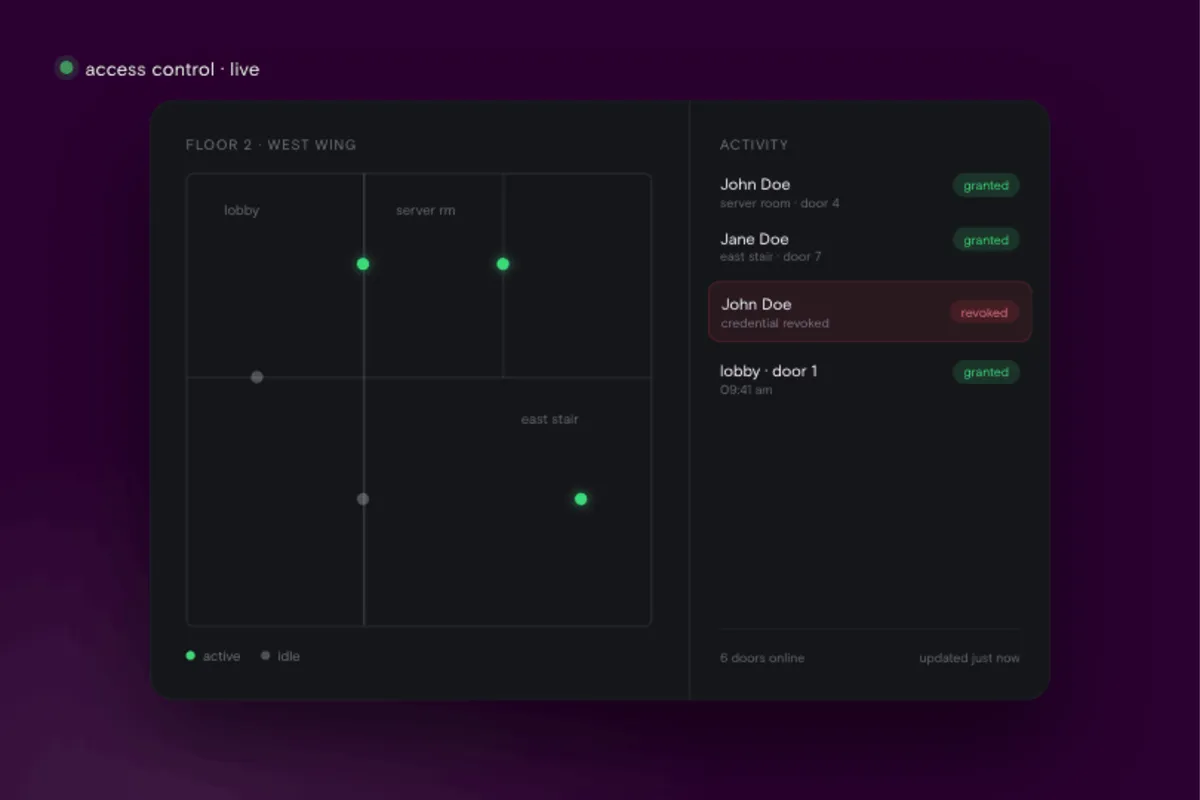
Enterprise visitor management integrates with access control systems and student information systems, connecting visitor management to the broader campus security infrastructure. When a visitor's QR badge activates door access at specific exterior doors, the system creates a unified record linking visitor identity to physical access. This seamless integration removes the gap between who signed in at the front desk and who actually moved through the building.
For schools already operating Acre Access Control, the connection between visitor management and access control is direct. Schools running other access control platforms can still benefit from Acre Identity's visitor check in system through Acre's broad integration capabilities, including Outlook, Teams, Google, and ChromeOS.
Multiple Locations, One Platform
Many schools operate across multiple locations, whether that's a district managing several campuses or a university with multiple buildings and visitor check in points. Acre Identity supports deployment across multiple locations from a single platform, enabling consistent visitor management policies and centralized reporting without requiring separate systems at each site.
Google, one of the world's largest organizations by site count, chose Acre as its long-term visitor management provider specifically for this kind of scalable, enterprise-grade deployment.
Acre's Enterprise Visitor Management is deployed by organizations that can't afford gaps in their visitor process. If that sounds like your school, Talk to the Acre team.
Key Features of Acre's Enterprise Visitor Management for Schools
Acre's Enterprise Visitor Management is built for environments where visitor control is a genuine safety requirement, not a formality. Here's what the platform delivers for schools.
Automated Screening Against Sex Offender Registries
Acre Identity runs automated screening against national sex offender registries and state and national databases during every visitor check-in, without requiring staff to initiate or interpret the process. The system checks IDs, flags possible matches in real time, and prevents unverified visitors from receiving a badge. Schools can also configure custom watchlists for individuals banned from a specific campus, regardless of whether they appear in public criminal databases.
Badge Printing With Photo Identification
After a successful check-in, Acre Identity automatically prints a visitor badge displaying the visitor's current photo, name, purpose of visit, and date. No staff action required. Photo ID badges make it straightforward for staff and students to identify who belongs on campus and immediately spot anyone without valid credentials.
Digital Visitor Logs and Comprehensive Reports
Every check-in and check-out is logged automatically, producing searchable, time-stamped digital records that are available on demand. Acre Identity generates comprehensive reports filterable by visitor type, date range, and location, giving administrators accurate records for compliance audits, incident reviews, and operational reporting without any manual data entry.
Real-Time Visibility for Emergency Response
In an emergency, EVM gives security personnel and administrators real-time occupancy information across the campus. Visitor data is accessible from any device, including mobile, so mustering and headcounts are accurate even when staff are away from the front desk.
Multi-Site Deployment From a Single Platform
EVM manages visitor management across multiple locations from one platform, with consistent screening rules, centralized reporting, and no need for separate deployments at each site. Google chose Acre as its long-term visitor management provider for exactly this kind of scalable, enterprise-grade capability, and schools with multi-campus operations benefit from the same architecture.
Implementing Acre EVM in Schools: What to Expect
Deploying Acre's Enterprise Visitor Management doesn't require a lengthy or disruptive rollout. The most successful implementations follow a clear sequence that gets the system configured correctly from the start and drives staff adoption quickly.
Assess Current Visitor Processes and Security Gaps
Start by mapping how visitors currently move through your campus. Which entry points do visitors use? Who is responsible for verifying visitor information? Where do manual processes create delays or incomplete records? This assessment gives you the information needed to configure EVM's visitor process flows accurately and identify which gaps the platform needs to close first.
Configure Screening Rules and Watchlists
Before go-live, connect EVM's automated screening to the relevant state and national databases and set up campus-specific custom watchlists. Define alert thresholds and staff notification routing so that real-time alerts reach the right person the moment the system flags a visitor. Schools that define these rules in advance, rather than adjusting reactively, get a more consistent visitor management outcome from day one.
Train Office Staff and Communicate With Stakeholders
Office staff are EVM's daily operators. Training should cover the check-in workflow, how to respond to real-time alerts, how to pull visitor logs for compliance purposes, and how to assist visitors at the self-service kiosk. Schools should also communicate the new visitor check-in process to parents, regular community members, and frequent contractors before launch, so the first day doesn't double as an orientation session for everyone walking through the door.
Monitor Performance and Refine the Visitor Process
After launch, use EVM's reporting tools to review visitor activity, check-in volumes during busy periods, and patterns in flagged alerts. Regular review of visitor data helps administrators confirm the system is performing as intended and identify where the visitor process needs adjustment. Acre recommends scheduling periodic reviews of screening connections and badge printing hardware to keep the system current.
Why Schools Choose Acre for Visitor Management
The organizations that trust Acre with visitor management aren't choosing it because it's the cheapest option or the easiest to deploy. They're choosing it because the stakes are high and the operational demands are real.
Google has relied on Acre as its long-term visitor management provider since 2012, deploying over 400 kiosks across its global estate. A Global Financial Services Company managing nearly 100 locations and over 60,000 visitors annually runs its entire visitor management operation on Acre EVM. Analog Devices chose Acre to digitize security and visitor control across its Limerick manufacturing facility, later adding Acre access control to create a unified on-site security platform. A leading German supermarket chain, one of the largest grocery retailers in the UK, deployed EVM across its headquarters and is expanding to 14 additional locations.
These aren't organizations with simple visitor flows or low compliance tolerances. They're complex, multi-site operations that need a visitor management system that performs consistently at scale and integrates with the security infrastructure they already run.
Schools face a comparable set of demands. High visitor throughput during drop-off and events, strict school safety obligations, compliance record-keeping requirements, and the need to screen every visitor, every time, without slowing down the front desk. EVM handles these demands without requiring schools to manage complex infrastructure. It's a cloud platform with no on-site server to maintain. It integrates with the tools schools already use. It scales from a single campus to multiple locations without a separate deployment at each site. And it connects with Acre's broader access control portfolio for schools that want to unify visitor management with door-level access control within a single vendor relationship.
Acre also supports hybrid deployments for schools that need to maintain some on-premises infrastructure while moving visitor management to the cloud. The platform is designed to meet schools where they are, not to force a rip-and-replace approach that disrupts operations or strains budgets.
Why Manual Visitor Processes Put Schools at Risk
Most school administrators understand that visitor management matters. The problem is that 'doing something' about it often means a paper sign-in book and a sticker badge with a visitor's first name written in marker. This gives the appearance of a visitor check in system without any of the protective function.
Here's what manual processes can't do.
They Can't Screen Against Criminal Databases
When a visitor signs a paper sheet, nobody is checking their identity against sex offender registries or criminal databases. A visitor management system for schools runs automated screening against state and national databases including national sex offender registries, flagging possible matches before the visitor is ever admitted. That screening happens in seconds, during check-in, without requiring a staff member to know how to run a background check.
97% of public schools now require visitors to wear badges, but badge compliance means nothing if the visitor process doesn't verify who that badge belongs to before printing it.
They Can't Guarantee Accurate Records
Paper visitor logs are incomplete, illegible, and non-searchable. When a compliance audit arrives or an incident needs to be investigated, staff have no reliable way to reconstruct visitor activity from a paper sheet. Digital records produced by a school visitor management system are time-stamped, filterable, and exportable, giving administrators accurate records without manual data entry.
They Can't Support Emergency Response
In an emergency, the question isn't whether someone signed in. It's who is on campus right now. A visitor management system provides real-time visibility into on-site visitor counts, enabling accurate headcounts and helping security personnel and first responders account for everyone present. Manual processes can't deliver this. A sheet on a clipboard, assuming it was even kept current, tells you nothing useful under pressure
Keeping Students Safe Starts at the Front Door
A school visitor management system is not a nice-to-have. It's the first control point between your campus and anyone who shouldn't be there. Manual visitor processes, no matter how conscientiously maintained, cannot screen visitors against criminal databases, cannot provide real-time visibility in an emergency, and cannot produce the accurate records that school safety compliance requires.
Acre's Enterprise Visitor Management gives schools the tools to manage every visitor from check-in through check-out, with automated screening, instant host notifications, comprehensive reporting, and seamless integration with access control and student information systems. It's the difference between logging a name on a sheet and actually knowing who is on campus.
If your school is evaluating visitor management solutions and you want to see how Acre addresses your specific campus requirements,
.webp)
.webp)