Visitor Management for Clinics: Simplifying Check-In and Compliance
.webp)
Clinic administrators face a difficult balance: maintaining a welcoming environment while keeping sensitive areas secure and meeting strict privacy requirements. The constant flow of patients, families, vendors, and contractors creates pressure on front-desk teams, especially in smaller or high-traffic facilities.
Manual sign-in sheets and paper logs still used in many clinics slow down check-in, introduce errors, and leave staff without a reliable view of who is onsite. These gaps can lead to longer wait times, higher security risk, and growing frustration for both visitors and employees.
This article outlines how modern digital visitor management systems solve these challenges. You will learn how automated check-in, real-time visibility, and integrated access control help clinics streamline visitor flow, strengthen compliance, and improve overall patient experience.
The need for visitor management in clinics
Clinics handle a constant flow of patients, family members, delivery personnel, and service contractors moving through reception areas, treatment rooms, and administrative offices. In compact, high-activity environments, this traffic can quickly overwhelm traditional sign-in methods. Clipboards, paper logs, and basic spreadsheets are slow, error-prone, and frequently incomplete, creating bottlenecks at check-in and leaving staff without a reliable view of who is in the building.
These visibility gaps carry real operational and security consequences. Delayed or inaccurate check-ins disrupt appointment schedules, contribute to longer wait times, and expose clinics to compliance and safety risks.
Without clear visitor records, it becomes harder to enforce access restrictions, support emergency response, or prove regulatory compliance.
Digital visitor management systems eliminate these pain points by automating check-in, providing accurate real-time tracking, and integrating directly with clinic workflows. The result is complete visitor oversight and a smoother, more secure experience for every guest.
Learn more about: Visitor Management
Core features of clinic visitor management solutions
The most effective visitor management solutions share several core capabilities.
User-friendly check-in
A simple, intuitive check-in process, often delivered through self-service kiosks or mobile apps reduces wait times and minimizes staff workload. Pre-registration allows patients and visitors to submit information ahead of time, while printed badges or digital passes clearly identify visitor types and support quick wayfinding.
Real-time oversight and access control
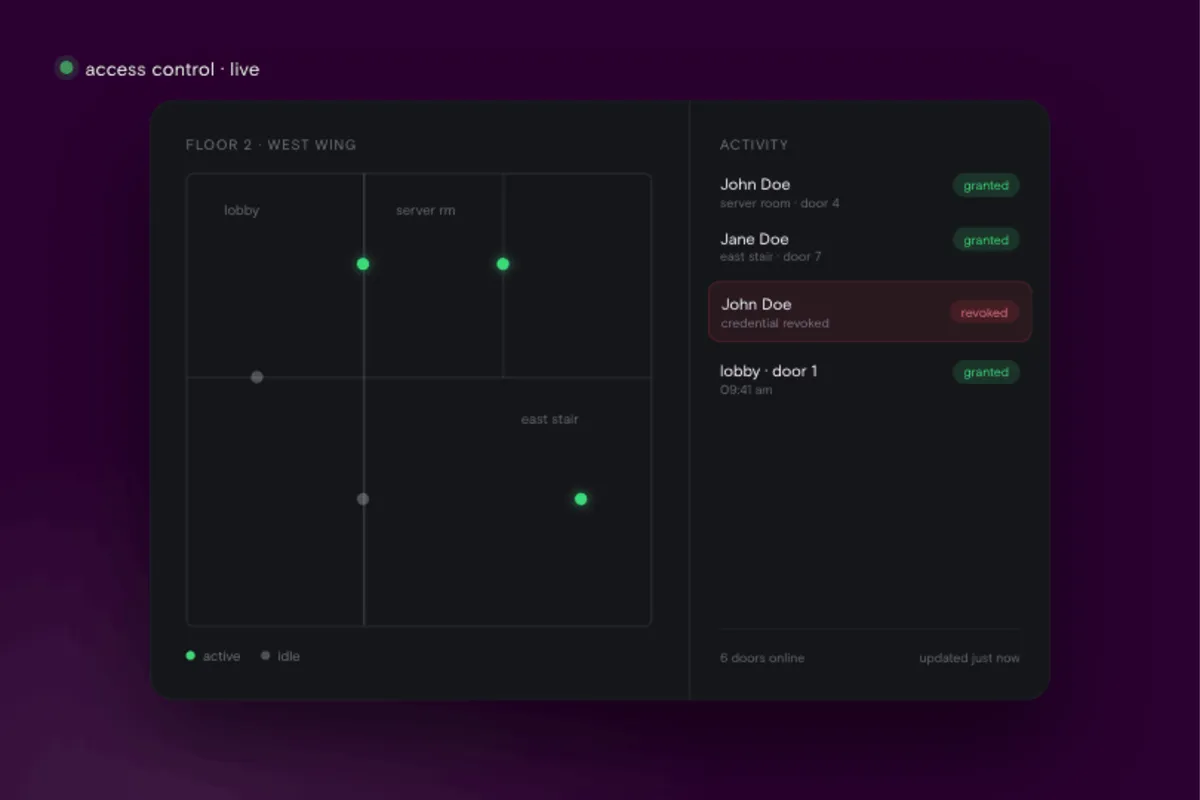
These platforms provide live visibility into who is on site and where they are. Customizable visitor badges and role-based access zones ensure guests only enter authorized areas. Real-time dashboards give administrators instant oversight of visitor movements and visit durations, improving both security and emergency preparedness.
Seamless integration
Strong integration capabilities are essential. Leading systems connect directly with access control platforms to automate door permissions and zone restrictions. They also deliver host notifications upon visitor arrival and offer comprehensive reporting tools for audits and operational reviews.
When integrated into existing workflows, visitor management becomes a natural, efficient part of clinic operations rather than a standalone task.
Simplifying check-in and visitor flow
Efficient visitor flow directly affects how smoothly a clinic operates. When arrivals move through reception without delays, appointments start on time, clinicians stay on schedule, and waiting rooms stay manageable. Digital check-in systems help create this predictability by giving visitors a clear, consistent process from the moment they enter.
Instead of lining up at the front desk, visitors can check in using kiosks or their own mobile devices. This allows staff to focus on tasks that require personal attention, such as assisting patients with special needs or handling complex inquiries. It also reduces the pressure on reception teams during peak hours, which helps maintain a calmer environment.
Clear routing is another area where clinics see practical benefits. Badges with defined permissions or simple digital instructions help visitors navigate the building without relying on constant staff direction. This is especially useful in clinics with multiple specialties, shared treatment areas, or rotating providers. It also reduces the amount of time staff spend escorting or redirecting visitors.
The resulting data gives clinics better insight into how their facilities are actually used. Trends such as high-traffic windows, frequent bottlenecks, or repeated misrouting can highlight opportunities to adjust staffing, signage, or room assignments.
Over time, these small refinements support a more organized, predictable flow of people through the clinic, which contributes to shorter wait times, fewer interruptions for clinical staff, and a better experience for everyone who enters the building.
Compliance, security, and data privacy
Compliance in a clinic is not just about ticking boxes. It affects legal exposure, patient trust, and the clinic’s ability to respond quickly when something goes wrong. Regulations such as HIPAA and GDPR require clinics to know exactly who accessed which areas, when they arrived, and what information they were given or could have encountered. Paper logs rarely provide the level of precision or accountability these standards demand.
Digital visitor management systems give clinics more control and a clearer audit trail. Instead of relying on handwritten entries, clinics can capture accurate visitor information in a secure, structured way. Permissions can be assigned automatically so visitors only access the areas that match their purpose in the building. This reduces the risk of accidental exposure to patient data or restricted clinical spaces.
One of the most practical benefits is the strength of the digital record. Time-stamped activity logs, automated reports, and identity verification steps make it easier to demonstrate compliance during audits, resolve discrepancies quickly, and investigate incidents without guesswork. This level of documentation also supports emergency planning. When an evacuation or lockdown occurs, clinic staff can run an instant roll call and confirm who is still inside the building.
By centralizing visitor data and applying consistent controls, clinics move from reactive compliance to proactive risk management.
This approach strengthens security posture, simplifies audit preparation, and reassures patients that their privacy and safety are taken seriously.
Key selection criteria for clinics
Choosing a visitor management system is ultimately a decision about workflow, security posture, and long-term operational fit. Clinics can narrow their options by focusing on the factors that most influence daily performance and future scalability.
- Usability: The system should be simple for both visitors and staff to use without training. Look for interfaces that reduce steps, support quick corrections, and adapt to different visitor types such as patients, contractors, and vendors. A solution that slows down reception, even slightly, will struggle to gain adoption and may undermine the clinic’s investment.
- Integration: Visitor management should work in sync with the platforms clinics already rely on. Confirm that the system connects to access control, appointment scheduling, directory systems, and communication tools. This eliminates redundant data entry and ensures check-in, access permissions, and notifications work as one coordinated workflow.
- Reporting and data management: Clinics need more than simple logs. The system should provide clear audit trails, configurable retention policies, searchable records, and dashboards that highlight patterns in visitor behavior. Strong reporting capabilities support compliance, help resolve incidents quickly, and give administrators insight into resource use and operational trends.
- Vendor reliability: Beyond features, the partner behind the product matters. Look for vendors with experience in healthcare environments, consistent product development, and responsive support teams. A reliable vendor helps clinics adapt as regulations change, security expectations evolve, and operational needs grow.
6 Step implementation roadmap for clinics
A structured rollout helps clinics adopt visitor management technology smoothly and with minimal disruption.
- Define requirements: Identify the visitor types, data fields,access rules, and compliance obligations the system must support. This createsa clear scope before configuration begins.
- Involve key staff: Bring in reception, IT, facilities, and compliance early. Their input ensures the system reflects actual workflows and prevents gaps that surface later.
- Configure and integrate: Set up visitor categories, badge templates, approval rules, and notifications. Connect the system to access control and scheduling tools so check-in, permissions, and alerts work together without manual steps.
- Pilot the system: Run a small-scale pilot to validate the setup, test integrations, and gather staff feedback. Adjust the workflow before expanding clinic-wide.
- Train and communicate: Provide short, focused training for staff and simple instructions for visitors. Clear guidance reduces onboarding friction and improves early adoption.
- Review and optimize: Monitor performance after rollout. Use data on check-in times, access issues, and visitor flow to refine the process and maintain long-term efficiency.
Future trends in clinic visitor management
The next generation of clinic visitor management will center on mobility, automation, and intelligence. Mobile check-in, remote pre-registration, and touchless workflows are quickly becoming standard, reducing front-desk load and improving patient flow.
Artificial intelligence will play a larger role in monitoring and predicting visitor activity. AI-driven anomaly detection can identify unusual behavior patterns, while predictive analytics can forecast peak visitor periods and inform staffing, routing, and room usage. As clinics collect more operational data, these systems will shift from simply logging visitors to actively optimizing movement and resource allocation.
Integration will also deepen. Visitor management platforms will connect more closely with access control, occupancy sensors, and building systems, creating a unified view of who is in the clinic and how space is being used. This helps clinics enforce zone restrictions, automate routing, and respond more quickly during emergencies.
Stricter privacy and compliance expectations will shape future designs. Systems will embed automated data retention, clearer consent flows, and stronger audit capabilities to support evolving HIPAA, GDPR, and regional standards.
Overall, the trend is toward intelligent, interconnected systems that support faster check-in, safer environments, and data-driven operational decisions.
How Acre Security can help
Acre Security provides an integrated platform that brings visitor management and access control together in a way that fits the realities of clinic operations. Clinics gain a streamlined digital check-in experience, secure identity verification, and real-time visibility into every visitor on site. This unified approach supports faster workflows, reduces administrative pressure, and strengthens overall security posture.
The platform is built to work within a clinic’s existing environment. Integrations with access control, scheduling systems, and facility infrastructure ensure that visitor permissions, routing, and notifications are handled automatically. Clinics also benefit from detailed reporting, granular zone management, and audit-ready records that simplify compliance.
Whether a clinic is looking to modernize check-in, reduce congestion, improve oversight of contractors and vendors, or enhance patient experience, Acre delivers a scalable path forward. The result is a safer, more predictable, and more efficient visitor experience across the entire facility.
Explore what this looks like in practice:
Read the Acre Security case study's
Ready to plan your clinic’s next step?
Summary and key takeaways
Visitor management has become a core part of clinical operations. When the process is digital, integrated, and secure, clinics gain faster check-in, clearer oversight of everyone on site, and stronger alignment with regulatory requirements. These improvements directly support patient experience, operational efficiency, and the clinic’s overall security posture.
To capture these benefits, clinics should start by understanding their visitor workflows, identifying points of friction, and selecting a solution that fits their environment. The right platform will not just modernize check-in, but also strengthen compliance, streamline staff workloads, and create a safer and more predictable facility for patients, guests, and providers.

.webp)